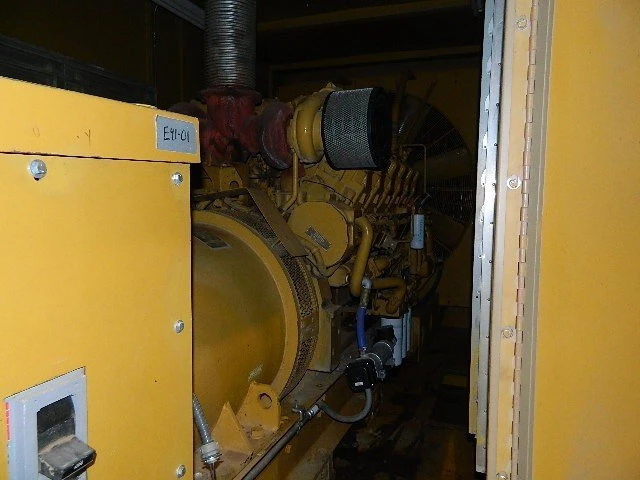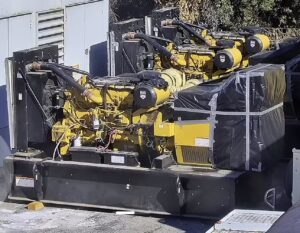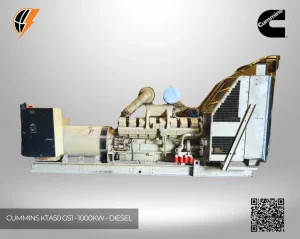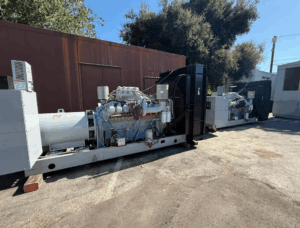
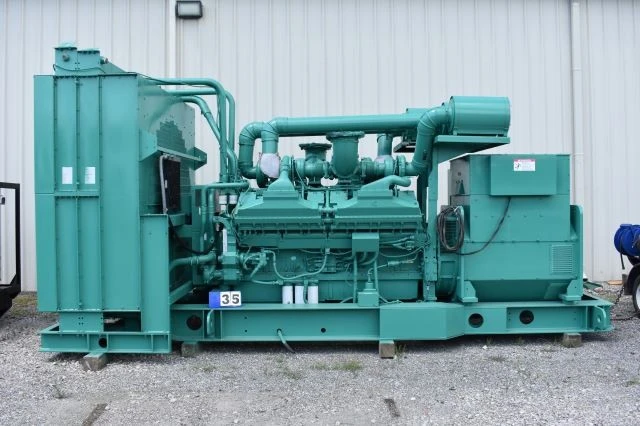
A diesel generator converts the chemical energy of diesel fuel into electrical power through compression-ignition combustion driving a synchronous alternator. Diesel is the global default for backup and prime power because it stores safely without degradation for 12–24 months (treated), produces high power density at low equipment weight, and starts reliably across wide temperature ranges without grid connection or utility infrastructure. Power Generation Enterprises has sold diesel generators from 50kW to 3,500kW for over 25 years from our Santa Clarita, California facility — this guide reflects that experience directly.
How Diesel Generators Work
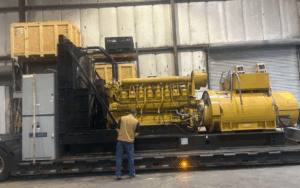
A diesel generator set consists of two primary components: a diesel engine and a synchronous AC generator (alternator). The diesel engine drives the alternator’s rotor shaft at a fixed speed — 1,800 RPM in North America for 60Hz output — while the engine’s governor maintains that speed under varying electrical loads. As electrical load increases, the governor opens the fuel injection system further to maintain constant shaft speed; as load decreases, fuel injection reduces proportionally.
Modern industrial diesel engines use common rail direct injection at pressures of 30,000–45,000 psi, turbocharging, and after-cooling to achieve fuel efficiencies of 8–10 gallons per hour per 100kW of output at full load. A 1,000kW diesel generator consumes approximately 80–100 gallons of diesel per hour at full rated output — the primary operating cost variable in any diesel generator life cycle analysis.
The alternator produces three-phase AC power at rated voltage — typically 480V in the US for industrial applications. A voltage regulator maintains output voltage within 1–3% of nominal across the full load range.
Diesel vs. Natural Gas vs. Propane
Diesel is the correct choice for applications requiring complete fuel independence from utility infrastructure, reliable cold-weather starting, and maximum power density. Natural gas is the correct choice for facilities with reliable utility gas service running generators frequently — prime power, co-generation, or high-exercise standby. See our natural gas generator guide for a complete comparison.
Diesel maintains one critical advantage: you can store the fuel on-site in any quantity and the generator operates regardless of grid or pipeline status. For mission-critical backup where 72+ hours of autonomy is required independent of any utility, diesel remains the most reliable fuel platform.
Diesel Generator Brands Compared
Caterpillar: The global standard for industrial diesel generators. The CAT 3512 (800–1,000kW) and 3516 (1,200–1,825kW) are the most widely deployed large commercial diesel generators in service today.
Cummins: The strongest competitor to Caterpillar. The QSK60 (1,500–2,000kW) directly competes with the CAT 3516 and typically sells for 10–15% less with comparable reliability.
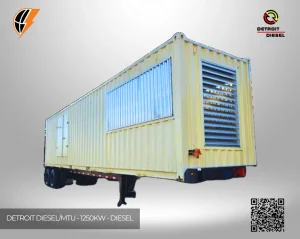
MTU / Detroit: German-engineered precision with the best fuel efficiency in the market — 5–10% better than CAT or Cummins at equivalent loads. The MTU Series 2000 (500–2,000kW) and Series 4000 (1,000–3,500kW) are the premium choice for facilities where generator efficiency directly affects operating cost.
Kohler: Strong in the 100–750kW standby market with MTU-powered large units offering German engineering at Kohler pricing. Browse Kohler diesel generators →
How to Size a Diesel Generator
Correct generator sizing requires knowing three values: running load (kW), peak demand (including motor starting inrush), and power factor. The formula: Generator kW = (Running Load / Power Factor) x 1.25 safety margin.
For a facility with 400kW running load at 0.8 power factor: Generator kVA = 400 / 0.8 = 500 kVA. With a 1.25 safety margin, specify a 625 kVA (500kW) generator minimum. Motor starting adds additional instantaneous demand — confirm with your electrician that the generator’s starting kVA rating covers the largest motor starting event.
Used Diesel Generator Pricing 2026
Used diesel generator pricing is driven by brand, power output, hours, emissions tier, condition, and enclosure. The ranges in the comparison table reflect inspected units from reputable dealers in serviceable condition — not auction prices or as-is non-running units.
What to Inspect Before Buying a Used Diesel Generator
Oil analysis: A laboratory oil analysis costs $35–$75 and reveals internal wear metals, coolant contamination, and fuel dilution that no visual inspection can detect. This is the single most valuable pre-purchase inspection on any used diesel generator.
Compression test: Cylinder-to-cylinder compression variation above 10% between cylinders is a red flag. On large V-engines (3516, QSK60), a full compression test is a half-day job — worth doing on any unit above $100,000.
Load bank test: Require a witnessed load bank test at 100% rated output for a minimum of two hours. Cooling system adequacy, governor stability, voltage regulation, and exhaust temperature all manifest under sustained full load in ways that brief no-load runs cannot reveal.
DDEC/EMCP fault history: Most modern industrial diesel generators log every fault, start event, and operating parameter in the engine’s electronic control module. Request a complete fault history download. A clean fault history is a meaningful indicator of proper operation.
Power Generation Enterprises performs all four of these inspections on every unit in inventory before listing it for sale. Call +1 (818) 484-8550 or visit our Santa Clarita facility to review documentation on any specific unit.
Related Guides
- Industrial Generator Pricing Guide 2026 — Detailed diesel generator pricing by brand, power class, and emissions tier with Caterpillar, Cummins, Kohler, and MTU coverage
- MTU vs. Caterpillar vs. Cummins: Complete Brand Comparison 2026 — Engine technology, fuel efficiency, parts networks, and 10-year total cost of ownership
- Commercial Generators: Complete Buyer Guide 2026 — Sizing, installation costs, and maintenance requirements for commercial and industrial standby applications