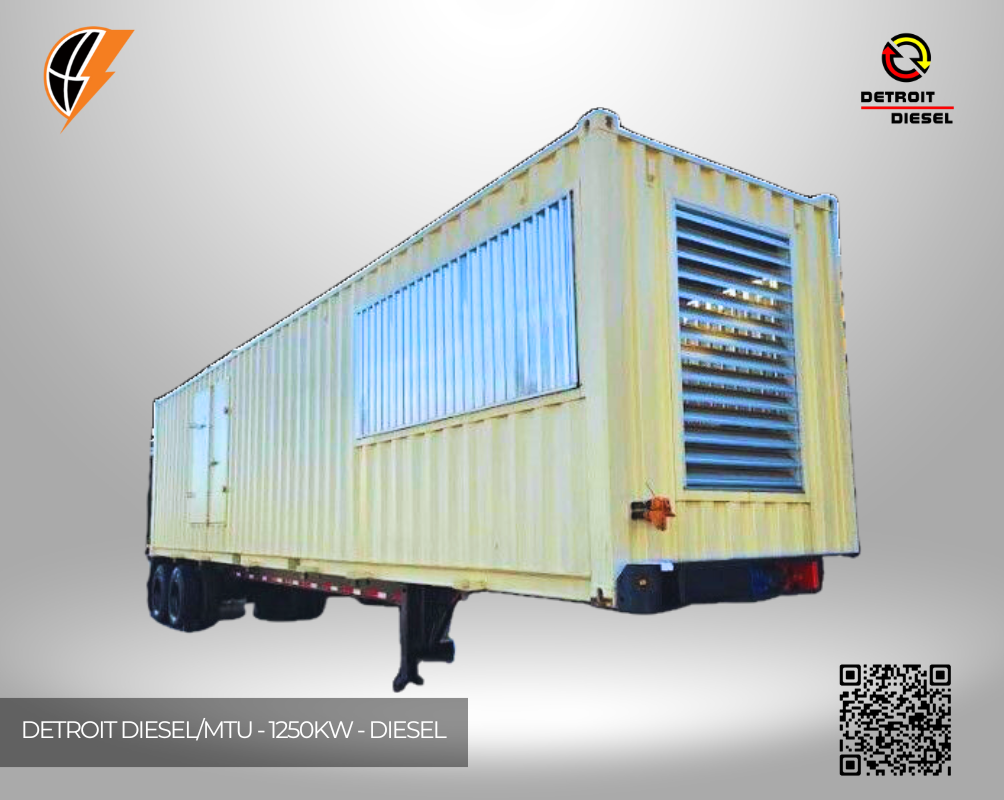
Containerized generator sets are the fastest-growing segment of the industrial power generation market. When a hospital needs a backup generator installed in 72 hours, when a data center expansion requires power before the permanent generator room is built, or when a construction project in a remote location needs a self-contained power station — a containerized generator set is what gets specified. This guide covers everything you need to evaluate, specify, and purchase one.
What Is a Containerized Generator Set?
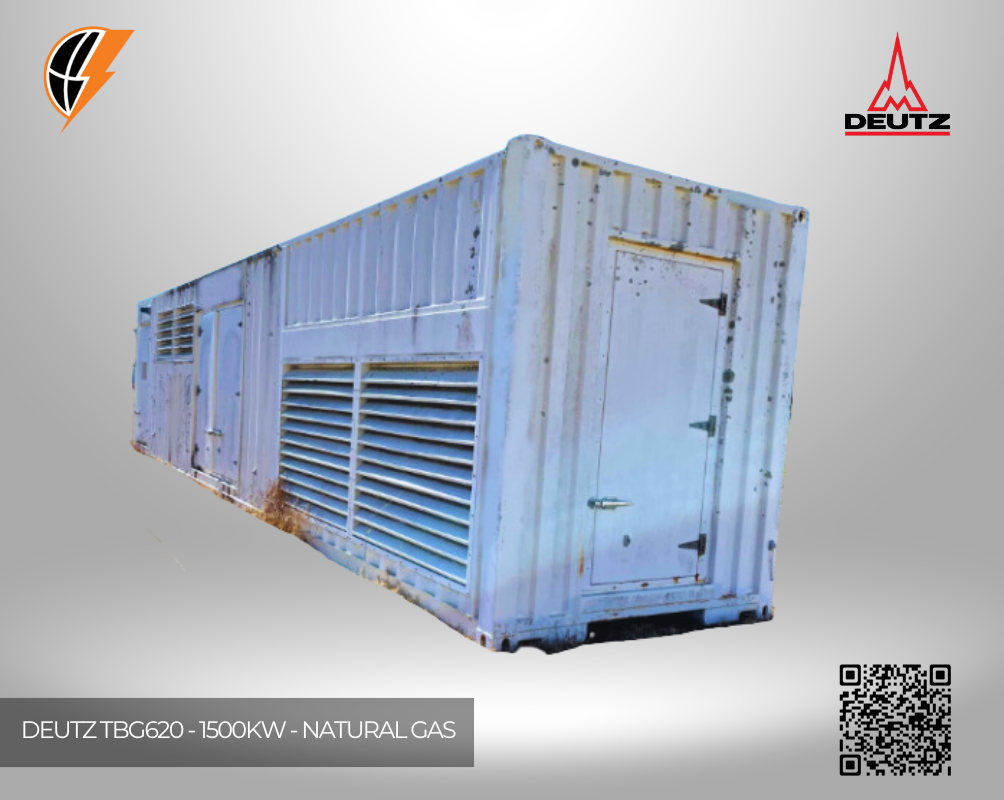
A containerized generator set integrates all the components of a complete power generation system inside a standard ISO shipping container. The steel container structure — typically a 20-foot or 40-foot unit — houses the engine, alternator, radiator, base fuel tank, control system, exhaust system, and sound attenuation in a factory-configured package. The result is a self-contained, weatherproof power station that ships as a single freight unit and connects to a load at the destination without requiring a separate equipment room.
The ISO shipping container format provides several structural and logistical advantages. The containers themselves are engineered for corner-casting lifting, international ocean freight, rail transport, and highway flatbed delivery — making containerized generators uniquely suitable for export, remote site deployment, and future relocation. A standard 40-foot ISO container sits within a 40′ × 8′ footprint, eliminating the need for a generator room in new construction and reducing site preparation costs significantly compared to open-frame installation.
Most containerized generator sets are built on one of two configurations. Factory-built OEM container packages are assembled by the generator manufacturer (Caterpillar, Cummins, Kohler, MTU) in a controlled manufacturing environment to a specific power rating. Field-packaged container sets are assembled by system integrators who install an open-frame generator inside a container with custom ventilation, fuel systems, and electrical connections. Factory OEM packages are generally more consistent but command a premium; field-packaged units are more common in the used market and offer equivalent performance when properly built.
20-Foot vs 40-Foot Container: Which Do You Need?
Container size selection is primarily driven by generator power output, which determines engine and radiator physical dimensions, fuel tank capacity requirements, and maintenance access space. The 20-foot ISO container is the minimum practical footprint for commercial and industrial generator applications, typically accommodating engines in the 300kW to 800kW range with standard radiator configurations. Above 800kW, the 40-foot container is almost universally required to maintain adequate air flow, serviceability, and fuel capacity.
High-cube containers — which add approximately one foot of interior height compared to standard ISO containers — are preferred for generator applications because they improve ventilation airflow, accommodate taller engines like the Caterpillar 3516, and allow maintenance personnel to work inside the container without excessive restriction. The additional cost of a high-cube over a standard-height container is typically $2,000-$5,000 and is almost always justified for generator applications.
For applications above 2000kW, custom skid packages on non-standard bases or purpose-built steel enclosures are often more practical than ISO containers, since the dimensional constraints of standard container widths (8 feet) begin to limit cooling system design and maintenance access. Power Generation Enterprises stocks 40-foot ISO containerized sets up to 2500kW — the practical upper limit for a single standard ISO container configuration.
Power Range and Engine Options
The used containerized generator market is dominated by four engine families: Caterpillar 3500 series (3516B and 3516C, 1500-2500kW), Cummins QST30 and QSK series (750-2250kW), MTU Series 2000 and 4000 (500-3500kW), and Detroit Diesel legacy platforms (600-2000kW). Each engine family has different maintenance requirements, parts availability, and performance characteristics that affect long-term operating costs.
The Caterpillar 3516C 2000kW container set is the most commonly requested containerized configuration in our inventory. The 3516C V16 engine produces 2000kW at 1800 RPM with exceptional reliability and the deepest spare parts network in the industry. The CAT EMCP4 control system provides comprehensive monitoring, automatic paralleling capability, and remote connectivity. Power Generation Enterprises currently stocks a 2000kW CAT 3516C Tier 2 containerized set for inspection at our Santa Clarita facility.
The Cummins QST30 1000kW container package represents the most cost-effective entry into the containerized generator segment for mid-range industrial applications. The QST30 V12 engine is electronically controlled with DDEC-equivalent diagnostics, widely supported through the Cummins dealer network, and available in both Tier 2 and Tier 4 Final configurations. We currently stock multiple Cummins QST30 1000kW Tier 2 containerized units.
Key Specifications to Evaluate
When evaluating a containerized generator set, the following specifications require careful verification beyond what a data sheet provides.
Container structural condition. ISO containers in the used market have often served in ocean freight before their generator application. Inspect all eight corner castings for cracking, the floor structure for corrosion (particularly at the floor-to-sidewall junction), and all door seals and locking mechanisms. Container structural inspection is inexpensive and prevents costly problems after deployment.
Ventilation and cooling system performance. The enclosed container environment creates unique thermal challenges. A generator that runs at rated output in open-frame configuration may derate inside a container if the cooling air path is undersized or partially obstructed. Verify the radiator exhaust duct condition, inlet louver sizing, and the absence of recirculation — hot exhaust air re-entering the cooling air intake is a common field problem on poorly configured container packages.
Fuel system capacity and condition. Most containerized sets integrate a sub-base or floor-mounted fuel tank. Verify actual tank capacity versus nameplate, inspect for internal corrosion on older units, and confirm the day tank connection and fuel transfer pump operation. At 75% load, a 1000kW diesel consumes approximately 50 gallons per hour — tank capacity directly determines unattended runtime.
Electrical interface configuration. Containerized sets are pre-wired to exterior electrical connection panels. Confirm the output connection type (camlock, circuit breaker, or bus bar), voltage configuration (single or dual voltage settings), and whether automatic transfer switch functionality is built in or external. International units may require rewiring for 60Hz/480V from original 50Hz/400V European configuration.
Applications: Where Containerized Generators Excel
Data centers deploy containerized generators for rapid expansion of backup power capacity. When a data center operator acquires a new facility or needs to increase power redundancy on a compressed timeline, a containerized set can be delivered, positioned, and connected in days rather than the months required to construct a permanent generator room. The container footprint sits on a concrete pad outside the building, connecting to the electrical infrastructure via a single exterior penetration.
Military and emergency response applications leverage containerized generators specifically because of the ISO container logistics compatibility. Forward operating bases, disaster recovery sites, and field hospitals require power infrastructure that can be delivered by standard military logistics — the same trucks, cranes, and ships that move ISO containers worldwide. The Caterpillar XQ series and equivalent containerized packages are the de facto standard for military and emergency power applications.
Remote industrial applications — mining operations, pipeline stations, remote processing facilities — use containerized generators because the self-contained design eliminates the need to construct a generator room in challenging terrain. The container itself provides the protective structure, the fuel system, and the sound attenuation in a unit that can be airlifted by helicopter if the access road is not adequate for truck delivery.
International export is perhaps the most distinctive application for containerized generators. Power Generation Enterprises ships containerized sets from our Santa Clarita facility to buyers worldwide — the ISO container format is inherently export-ready, eliminating the custom crating required for open-frame units. We regularly export containerized generators to Latin America, the Middle East, and Southeast Asia.
Containerized Generator Pricing
Containerized generator set pricing in the used market reflects both the underlying engine value and the condition of the container package, control system, and fuel system. Buyers should budget for the generator set plus freight (containerized units are heavy — 15,000 to 30,000 pounds fully loaded), any required voltage/frequency conversion for international applications, and commissioning costs at the installation site.
Current pricing on containerized generator sets at Power Generation Enterprises:
Cummins QST30 1000kW Tier 2 container packages currently run $95,000-$175,000 depending on hours and condition. The Spectrum Detroit/MTU 1250kW containerized diesel set is priced in the $120,000-$200,000 range. The Caterpillar 3516C 2000kW Tier 2 containerized package represents the upper end of our current inventory at $200,000-$350,000 for late-model low-hour units. Contact Power Generation Enterprises at +1 (818) 484-8550 for current pricing on specific containerized configurations — inventory changes as units are acquired and sold.