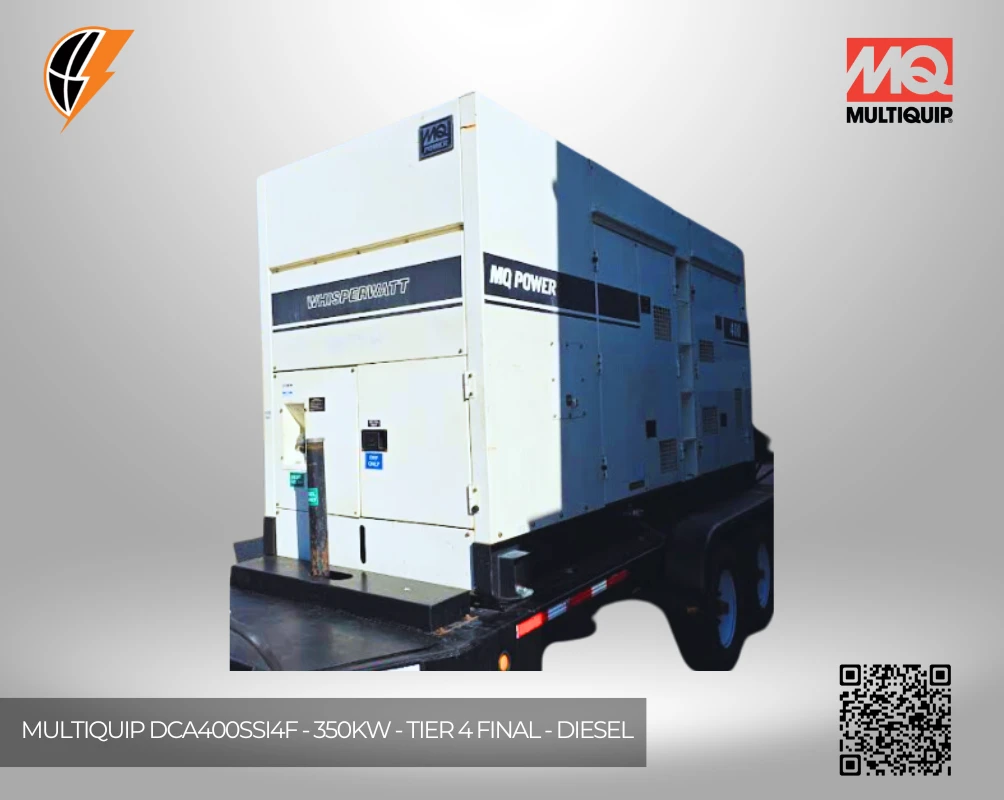
Tier 4 Final is the EPA’s strictest diesel engine emissions standard, requiring 90% reduction in particulate matter and NOx versus Tier 2. All new diesel generators above 25kW sold in the United States since 2015 must meet Tier 4 Final — and in California, all new emergency standby installations in South Coast AQMD and Bay Area AQMD require Tier 4 compliance regardless of manufacture date. This guide covers exactly what Tier 4 means for generator buyers, which technologies achieve compliance, what it costs versus older equipment, and when Tier 4 requirements apply to your application.
Understanding Tier 4 is no longer optional for anyone buying, specifying, or operating industrial generators. Compliance requirements affect permitting, resale value, insurance, and in regulated California air districts, the ability to operate at all.
What Are EPA Tier Emissions Standards?
The EPA’s nonroad diesel engine emissions standards apply in four progressive tiers, each tightening allowable levels of particulate matter (PM), nitrogen oxides (NOx), hydrocarbons (HC), and carbon monoxide (CO). The tiers apply by engine horsepower class and implementation dates staggered from Tier 1 (1996) through Tier 4 Final (2015 for most generator classes).
Tier 4 Final limits, as defined in 40 CFR Part 1039, are:
- PM (particulate matter): 0.02 g/kWh — a 96% reduction from Tier 1 levels
- NOx: 0.4 g/kWh (above 560kW) — an 80% reduction from Tier 2 levels
- HC: 0.19 g/kWh
These reductions require either advanced in-cylinder combustion technology (exhaust gas recirculation, high-pressure common rail injection) or exhaust aftertreatment systems — or both. Most Tier 4 Final generators above 175kW use a Selective Catalytic Reduction (SCR) system with Diesel Exhaust Fluid (DEF) as the primary NOx reduction technology.
How Tier 4 Compliance Is Achieved
Generator manufacturers achieve Tier 4 Final through two technology pathways, often combined:
Cooled Exhaust Gas Recirculation (EGR): A portion of exhaust gas is routed back through the intake and cooled before re-entering the combustion chamber. Lower combustion temperatures reduce NOx formation at the source. EGR is used primarily in lower-power generators (25–175kW) where the additional complexity of SCR would be cost-prohibitive.
Selective Catalytic Reduction (SCR) with DEF: Diesel Exhaust Fluid — a 32.5% urea solution — is injected into the exhaust stream upstream of a catalyst. The urea reacts with NOx to produce nitrogen and water. SCR is the dominant NOx reduction technology on generators above 175kW because it achieves the required 80%+ NOx reduction without the fuel economy penalty of EGR alone. SCR systems require a continuous DEF supply and periodic maintenance of the dosing injector and catalyst.
Diesel Particulate Filter (DPF): A wall-flow filter traps particulate matter from the exhaust stream. DPFs regenerate — burning accumulated soot — either passively through exhaust heat or actively through fuel injection. Most Tier 4 Final generators combine a DPF with SCR for simultaneous PM and NOx control.
Tier 4 Final vs. Tier 2: The Real Cost Comparison
Tier 4 Final generators cost 15–25% more than equivalent Tier 2 units at time of purchase. A Caterpillar C18 500kW in Tier 2 configuration typically sells for $85,000–$140,000 used; the same engine in Tier 4 Final sells for $110,000–$175,000. The premium exists for two reasons: more sophisticated aftertreatment hardware and lower supply of Tier 4 units reaching the used market (they are newer).
The operational cost calculus favors Tier 4 in three scenarios: California AQMD-regulated facilities where Tier 2 equipment faces operational restrictions; applications requiring unlimited run hours without air permit complications; and organizations where ESG commitments or contract requirements mandate low-emission equipment.
For emergency standby applications with minimal annual run time and no regulatory pressure, Tier 2 equipment frequently remains the better financial choice — particularly in non-California markets where Tier 4 requirements apply to new equipment sales but not to operating existing inventory.
California CARB and AQMD Requirements
California operates stricter generator emissions regulations than federal EPA standards through the California Air Resources Board (CARB) and regional air quality management districts. Understanding the California rules is essential for any generator installation in the state.
South Coast AQMD (covering Los Angeles, Orange, Riverside, and San Bernardino counties) requires CARB certification for all new emergency generator installations. Permitted generators in the South Coast must use CARB-certified Tier 4 Final equipment or obtain a specific permit for older equipment with operational restrictions. Emergency generators are exempt from most operational restrictions but must maintain valid AQMD permits and submit to inspection requirements.
CARB Tier 4 certification and EPA Tier 4 Final are equivalent for most purposes — generators certified to one standard are accepted under the other. However, some California-specific requirements (fuel sulfur content, opacity testing, BACT determinations for large installations) apply only in California and must be confirmed with the relevant air district before installation.
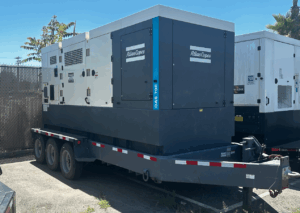
Power Generation Enterprises stocks CARB-compliant Tier 4 Final generators including the CAT XQ230 200kW Tier 4 FINAL/CARB and multiple Atlas Copco Tier 4 Final units for California applications. Call +1 (818) 484-8550 to confirm CARB compliance status on any specific unit before purchase.
DEF Requirements for Tier 4 Final Generators
Most Tier 4 Final generators above 175kW require Diesel Exhaust Fluid to operate. DEF must meet ISO 22241 specification (32.5% urea, 67.5% deionized water) and must be stored and handled correctly to maintain quality. For emergency standby generators — which may sit unused for months between test runs — DEF quality management is a specific maintenance challenge.
DEF crystallization in generator tanks is the leading cause of SCR-related fault codes on standby units. Unlike over-the-road trucks that consume DEF continuously, a standby generator’s partially filled DEF tank is exposed to air, temperature cycling, and extended static storage — conditions that concentrate urea and produce crystalline deposits in the dosing injector and pump screen. P207F and P20EE fault codes from DEF system issues are increasingly common causes of generator failures during actual emergencies.
Pre-storage DEF treatment and regular DEF quality testing are essential maintenance protocols for any facility operating Tier 4 Final standby generators. The DEF Academy at NuDef covers comprehensive SCR system maintenance protocols specifically designed for generator applications — including crystallization prevention procedures, fault code diagnostics, and fleet management guidelines for facilities operating multiple Tier 4 units.
Tier 4 Interim vs. Tier 4 Final: Know the Difference Before You Buy
Between Tier 3 and Tier 4 Final, the EPA created a transitional standard called Tier 4 Interim (abbreviated Tier 4i). Tier 4 Interim applied from approximately 2011–2014 for most generator power classes and required meaningful emissions reductions — but not to the full Tier 4 Final level. A significant portion of generators in today’s used market (2012–2018 vintage) are Tier 4 Interim, not Tier 4 Final, and the distinction matters for California buyers especially.
Key differences between Tier 4 Interim and Tier 4 Final:
- NOx limit: Tier 4 Interim allows approximately 2.0 g/kWh for most generator classes; Tier 4 Final requires 0.4 g/kWh — an 80% further reduction
- DEF requirement: Many Tier 4 Interim generators achieve compliance through EGR alone and do not require DEF. Tier 4 Final generators above 175kW almost universally require SCR/DEF systems
- California AQMD: For most new installation permits in South Coast AQMD, Tier 4 Final is required — Tier 4 Interim is not sufficient. Confirm with your air district before purchasing Tier 4 Interim equipment for a new California installation
- Pricing: Tier 4 Interim units typically sell at a 10–15% discount to Tier 4 Final units of equivalent power and hours, because of their regulatory limitations in California markets
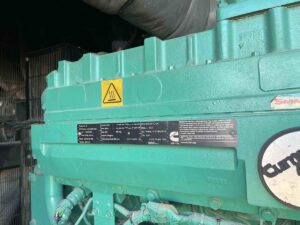
When a seller describes a generator as “Tier 4” without specifying Final or Interim, always request the engine emissions certificate (EPA or CARB certification label) to confirm which standard applies. Power Generation Enterprises lists the specific emissions tier on all inventory — Tier 4 Interim and Tier 4 Final are not interchangeable for California AQMD applications.
Tier 4 Final Generator Inventory
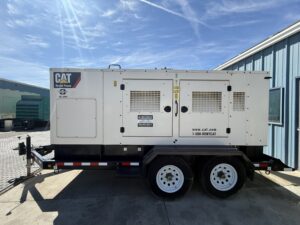
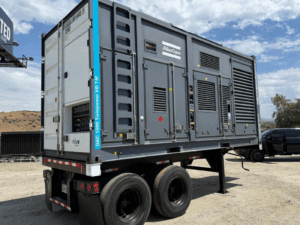
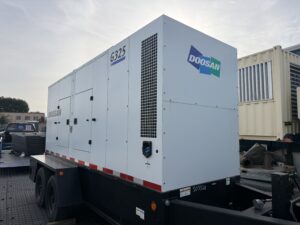
Power Generation Enterprises maintains active Tier 4 Final inventory across all major power ranges — from 50kW portable units to 1,250kW prime power modules. All Tier 4 units undergo emissions system verification and load testing before sale. Current inventory includes Doosan, Atlas Copco, Caterpillar, Blue Star, and Multiquip Tier 4 Final units. Browse the full Tier 4 Final inventory →
Related Guides
- Industrial Generator Pricing Guide 2026 — How Tier 4 Final requirements affect generator pricing vs. Tier 2 and Tier 4 Interim
- Diesel Generators for Sale: Complete Buyer Guide 2026 — What to inspect on used Tier 4 generators before purchase, including SCR system evaluation
- Commercial Generators: Complete Buyer Guide 2026 — NFPA 110 compliance requirements and AQMD permitting for commercial standby installations