Detroit Diesel Corporation produced some of the most recognizable diesel engines in American industrial history. The distinctive sound of a two-stroke Detroit — the blower whine, the exhaust note that anyone who has worked around heavy equipment immediately recognizes — accompanied construction projects, military operations, marine applications, and industrial facilities for five decades. Those engines still power generator sets actively in use today.
Understanding the Detroit Diesel generator lineup requires understanding three distinct engineering eras, each with different characteristics, parts ecosystems, and ideal applications.
Detroit Diesel Generator Engine Families
Detroit Diesel engines fall into three clear categories: the two-stroke V-series that defined the company from the 1930s through the 1990s, the four-stroke Series 60 that bridged the transition to modern emissions standards, and the Detroit/MTU Series 2000 and 4000 that represent the current premium industrial platform.
Each family has a different user base. The two-stroke V-series engines attract buyers who prioritize mechanical simplicity, parts availability through specialty networks, and extraordinary durability over fuel economy and emissions compliance. The Series 60 serves buyers who want modern four-stroke efficiency with proven Detroit reliability. The MTU series serves industrial buyers and data center operators who need premium performance with full emissions compliance and manufacturer support.
Power Generation Enterprises stocks all three generations in our Santa Clarita facility. We sell to buyers who know exactly which engine they need and to first-time Detroit Diesel buyers who need guidance through the options.
Two-Stroke V-71 and V-92 Series
Detroit Diesel Generators ·
MTU Generators
— All available units at Power Generation Enterprises
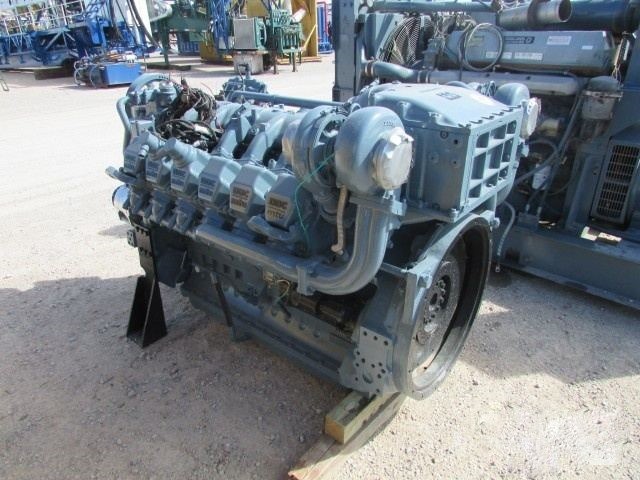
The V-71 series entered production in 1938 and established the Detroit Diesel reputation for indestructibility. The naming convention describes displacement per cylinder — a 6V71 has six cylinders displacing 71 cubic inches each. A 16V92 has sixteen cylinders displacing 92 cubic inches each, producing approximately 750 to 950 horsepower in generator configuration.
In generator applications, the V-71 and V-92 engines are typically paired with older generator ends and control systems. These units are mechanically simple — an experienced diesel mechanic can rebuild a V-92 in the field with basic tools. Fuel injection is mechanical, not electronic, which eliminates the sensor failures that plague modern engines but also means these units run rich and loud compared to contemporary designs.
The appeal of two-stroke Detroit generators is straightforward: they are available at a fraction of the cost of equivalent modern units, they can be rebuilt indefinitely, and they perform reliably in applications where fuel cost is less important than acquisition cost and proven durability. Military surplus, remote industrial applications, and budget-conscious standby installations are their natural homes.
Series 60 Four-Stroke Generators
The Series 60, introduced in 1987, was Detroit Diesel’s answer to tightening emissions regulations and customer demand for better fuel economy. The engine moved from the two-stroke architecture to a four-stroke design with overhead camshafts and electronic fuel injection through the Detroit Diesel Electronic Controls (DDEC) system.
In generator applications, the Series 60 typically appears in the 300 to 600kW range. The DDEC system — available in versions II through VI — provides comprehensive diagnostics that make fault identification straightforward. Parts availability for the Series 60 remains strong through Detroit Diesel dealer networks and independent suppliers.
The Series 60 generator represents the sweet spot for buyers who want the Detroit Diesel name and durability without the noise and fuel consumption of the two-stroke legacy engines. These units are significantly quieter than V-series engines, meet older Tier 1 and 2 emissions standards, and are available in large quantities in the used market at pricing well below equivalent Caterpillar or Cummins units from the same era.
Detroit MTU Series 2000 and 4000
Following the acquisition by Daimler and the alignment with MTU (Rolls-Royce Power Systems), the premium Detroit industrial generator line was rebranded as Detroit/MTU. The Series 2000 covers the 500kW to 2000kW range; the Series 4000 covers 1000kW to 3500kW and above.
These are German-engineered engines produced to exceptional tolerances. Fuel consumption is consistently 5 to 10 percent better than comparable Caterpillar 3516 or Cummins QSK units in the same power class. The engineering reflects MTU’s heritage serving the German military, high-speed marine, and European industrial markets — applications where reliability and efficiency are not trade-offs but simultaneous requirements.
Detroit/MTU units are available in Tier 2 through Tier 4 Final configurations. For California AQMD applications, the Tier 4 Final MTU units qualify for emergency standby permits without the operational restrictions that apply to older Tier 2 equipment. For data center applications where generator efficiency directly affects operating costs, the MTU fuel consumption advantage compresses the ROI timeline versus competing brands.
What to Look For When Buying Used
Detroit Diesel generators purchased from reputable dealers like Power Generation Enterprises have been evaluated for the specific failure modes and maintenance indicators relevant to each engine series. For buyers doing their own due diligence, several checkpoints apply across all Detroit Diesel generations.
Engine oil analysis should be the first step on any significant purchase. Detroit Diesel engines — particularly the two-stroke series — show wear patterns in oil chemistry that reveal internal condition more accurately than visual inspection or hour meters. A lab oil analysis costs under $50 and provides data that no amount of physical inspection can match.
Blower condition is the critical inspection point on two-stroke V-series engines. The roots blower provides the scavenging air that makes the two-stroke cycle work. Blower bearing wear, seal leakage, and rotor clearance degradation are the most common issues on aged two-stroke Detroit engines. An experienced Detroit Diesel technician can assess blower condition in minutes.
For Series 60 units, pull the DDEC fault codes before purchase. The DDEC system logs faults with timestamps and occurrence counts. A clean fault history indicates proper operation; a long history of recurring faults indicates problems that may have been cleared without repair. Most Detroit Diesel dealers can pull DDEC logs with standard equipment.
Detroit Diesel Generator Pricing
Detroit Diesel generators span the widest price range of any major brand in the used generator market — from under $10,000 for a working V-92 in basic condition to over $400,000 for a late-model MTU Series 4000 in excellent condition. The comparison table above summarizes the typical ranges by engine series.
The used Detroit Diesel market is strong because the engines are proven and the supply of available units is substantial. Both factors benefit buyers: strong demand means the resale value holds well, and strong supply means competitive pricing between sellers.
Power Generation Enterprises prices Detroit Diesel generator sets based on verified engine condition, hours, and complete system evaluation including the generator end, control system, and enclosure if present. Our Santa Clarita inventory changes regularly as units are acquired, inspected, and sold. Call +1 (818) 484-8550 for current availability and pricing on specific configurations.