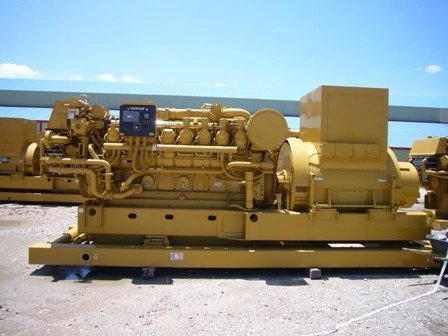
Have you ever wondered what would happen if your backup power generator fails when you need it the most? Power outages are unpredictable, and power generators are incredibly useful for delivering alternate power. What if your generator isn’t performing at its peak? Wouldn’t this imperil your business? Avoid such a situation from arising by getting your generator synchronized.
Before you get ready to synchronize your generators, it is important to understand what this phenomenon is. Let us walk you through all the things you need to know about generator synchronization and why it is crucial for your business.
What is Generator Synchronization?
Generator synchronization is the process of matching key electrical parameters such as voltage, system frequency, alternator waveform, phase angle, and phase sequence between a generator and an existing power grid or another generator. It is essential before the generator is reconnected to a source of power. The power system is prepared to run smoothly once these parameters are synchronized with the other generators.
Though complex, the synchronization of generators is an important process. It requires a lot of care since any mishap could impact the power system and the general system.
Importance of Generator Synchronization
The synchronization of generators becomes significant when two or more alternators work simultaneously to supply the power to the load. If a business has more than a single generator, then all the machines need to be interconnected together to maintain constant electrical loads. This parallel operation uses a series of small units instead of utilizing a single generator. As such, synchronization is necessary for parallelization.
Several commercial plants prefer this setup due to its reliability, load, capacity, efficiency, and continuity.
Requirements for Getting Your Generators Synchronized
Ensure that the following parameters are properly aligned between your generators during the synchronization process.
- Voltage Magnitude: If the voltage magnitude between the bus bar and the alternators is not synchronized, it can cause significant disruptions. A high reactive power in the grid can be created if the alternator voltage is more than the bus bar, and this can pose safety issues. At the same time, low alternator voltage can cause the generator to absorb excessive reactive power, which may lead to long-term damage or failure.
- Phase Sequence: The alternators’ three phases in the system should have the same phase sequence as the phases of the bus bar or electric grid.
- Phase Angle: The phase angle between the generator alternator and the bus bar must be zero.
- Frequency: The frequencies are extremely important since their inequality can lead to an unstable flow of energy. It may lead to damaged equipment in some cases.
Techniques for Synchronization
Generator synchronization can be complex, but there are different techniques for handling it.
- Three Dark Lamps Method: This technique uses three dark lamps that illuminate based on the frequency matching between the generator and the bus bar. It does not involve needing any information on the bus bar frequency and generator.
- Two Bright One Dark Method: This method measures the frequency, but it does not check the accuracy of the phase sequence.
- Synchroscope Method: This method uses a synchroscope, an instrument that visually indicates whether the incoming generator’s frequency is higher or lower than the bus bar’s frequency. It provides precise feedback for synchronization.
Get the Best Quality Generators in no Time!
Generator synchronization is a crucial process, but it is also important to get good-quality machinery from the get-go. Buy some of the best generators. You can source from the Power Generation Enterprises. We provide different brands while also delivering both used and new machines. This way, you can get any generator that fits your business needs while also accommodating your budget.
Common Questions About Generators Synchronization
1. What parameters are considered for the generator synchronization process?
The parameters that are needed during the synchronization process include the phase sequence, the waveform of the alternator, phase angle, voltage, and frequency.
2. What happens if the generator synchronization is performed poorly or incorrectly?
If the generator is synchronized poorly, then it could lead to damages caused by mechanical stress that arises due to the rapid deceleration or acceleration. Further damage to the step-up transformer windows and generator can occur due to the high currents. There can be issues caused to the power system as well as disturbances. Such hurdles make it necessary to perform a generator synchronization without any errors.
3. Why should generators be synchronized?
Generators need to be synchronized when two or more alternators are working together to supply power. The synchronization process ensures that the electrical loads remain constant and do not face challenges.
4. How to maintain generators for better longevity?
Maintain your generators by inspecting them frequently and making oil changes whenever needed. Its fuel system also needs to be maintained to ensure that there are no impurities that cause poor performance. You must also take care of the battery and the cooling system, which plays a significant role in making the generator work efficiently.
Sources: