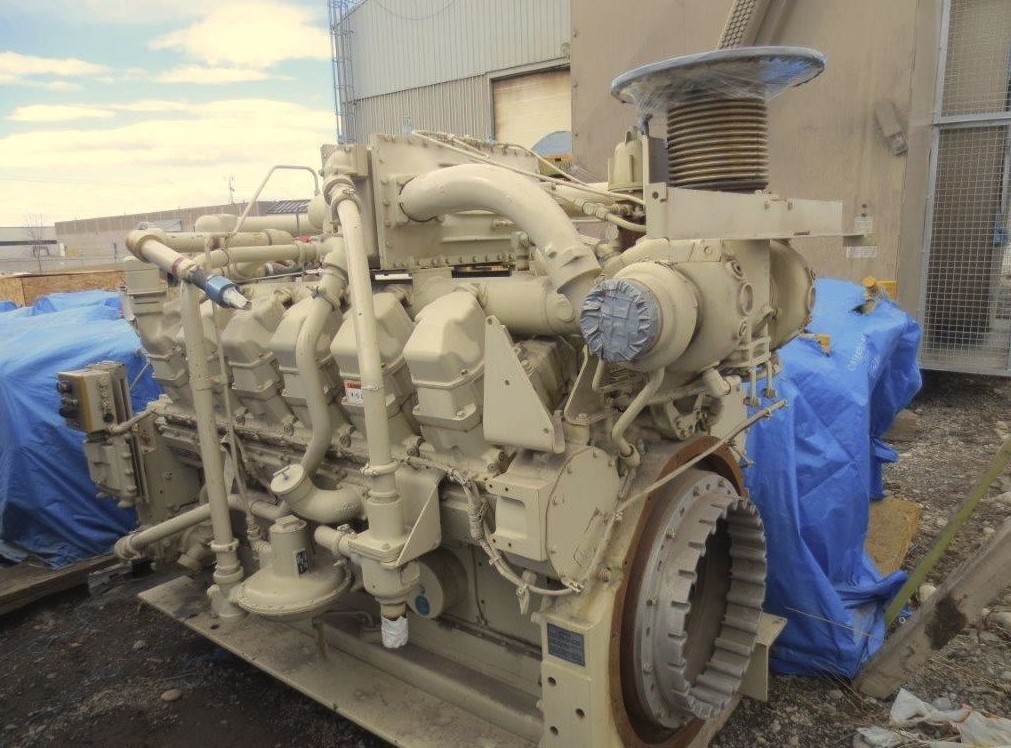
Natural gas generators have moved from a niche alternative to the default choice for new commercial standby power installations in California and a growing preference in markets where diesel fuel cost, delivery logistics, and emissions compliance are driving operating decisions. Understanding which natural gas generator platforms exist, where they excel versus diesel, and what distinguishes one platform from another requires more technical depth than most procurement guides provide. This guide delivers that depth.
Natural Gas vs Diesel: The Core Trade-Off
The fundamental case for natural gas generators rests on four factors: fuel cost and availability, emissions performance, permit complexity, and operational simplicity. Natural gas delivered through a utility pipeline costs 30-60% less per British thermal unit than diesel fuel at current prices, and it arrives at the generator on demand without scheduling deliveries or managing on-site fuel storage. For facilities that run generators continuously or for significant hours annually — hospitals, data centers, manufacturing plants — this fuel cost differential translates to tens or hundreds of thousands of dollars in annual savings.
The emissions picture is equally favorable. Natural gas combustion produces significantly lower nitrogen oxides, particulate matter, and sulfur compounds than diesel combustion. For facilities in California’s South Coast Air Quality Management District and in other regions with strict air quality regulations, natural gas generators typically qualify for more favorable permit pathways, fewer operational hour restrictions, and simpler annual compliance reporting than their diesel equivalents.
The trade-offs are real but manageable. Natural gas generators require utility gas supply at adequate pressure and volume, which is not available at all sites. They are slightly less responsive than diesel at startup — taking 10-30 seconds longer to reach stable output under full load in some configurations. And their capital cost for equivalent power output is generally 10-20% higher than diesel alternatives due to the more complex air-fuel management systems required for emissions compliance.
For California facilities, urban facilities, and facilities with continuous or near-continuous power requirements, natural gas is almost always the preferred choice when gas supply is available. For remote sites, construction applications without gas supply, or applications requiring maximum power density in minimum footprint, diesel remains the practical choice.
California AQMD and CARB Compliance
California’s South Coast Air Quality Management District enforces the most stringent generator emissions regulations in the United States through Rule 1470. Under Rule 1470, diesel generators above 50 brake horsepower face operational hour limits, mandatory load bank testing, and emissions monitoring requirements that significantly increase operating cost and administrative burden. Natural gas generators in California face a fundamentally different regulatory treatment — one that generally provides more operational flexibility for emergency standby applications.
The core advantage of natural gas for California standby installations is that natural gas generators meeting CARB certification standards qualify for emergency standby permits without the same operational hour restrictions that apply to diesel. A CARB-certified natural gas generator can legally operate for the hours required to maintain life safety and critical operations during utility outages, while a Tier 2 diesel generator faces annual hour caps that can restrict testing and maintenance.
For new standby generator installations in Los Angeles, Orange, Riverside, and San Bernardino counties, Power Generation Enterprises strongly recommends consulting with an AQMD permit specialist before committing to a generator platform. The specific permit requirements depend on the facility type, distance from sensitive receptors, generator size, and intended duty cycle. We can connect buyers with AQMD permit specialists familiar with the current Rule 1470 requirements for both diesel and natural gas standby installations.
Caterpillar G-Series Natural Gas Generators
The Caterpillar G-series is the dominant natural gas generator platform in the commercial and industrial standby market in the United States, leveraging CAT’s dominant dealer network and brand recognition in the generator industry. The G-series engines use lean-burn combustion technology — running the air-fuel mixture significantly lean of stoichiometric — to achieve low NOx emissions without requiring a three-way catalyst in most applications.
The CAT G3412 (375-450kW) is the most commonly installed natural gas standby generator in the California commercial market. Its CARB certification, availability through the CAT dealer network, and established service ecosystem make it the low-risk specification for commercial buildings, hospitals, and data centers in the AQMD service area. Power Generation Enterprises currently stocks multiple CAT G3412 units in the 375-450kW range.
The CAT G3512 (550kW) represents the mid-range industrial natural gas generator — capable of powering large commercial buildings, data hall expansions, and manufacturing facilities requiring 500-600kW of backup power. We stock both standard and LE (Low Emissions) variants of the G3512, with the LE configuration providing enhanced CARB compliance for the most sensitive California permit situations. Current pricing on G3512 units runs from $85,000 for higher-hour configurations to $250,000 for low-hour LE variants in excellent condition.
The CAT G3520 represents the upper end of the Caterpillar natural gas platform, producing 1000-2500kW from a 20-cylinder configuration. Power Generation Enterprises stocks the G3520 2500kW 12470V variant — a high-voltage unit suited for large industrial facilities and utility interconnection. At 2500kW, this unit is one of the largest single natural gas generator sets available in the pre-owned market.
Waukesha Natural Gas Generators
Waukesha (now part of INNIO Group) occupies a distinct position in the natural gas generator market: continuous-duty industrial power at scales and duty cycles that standby-oriented platforms from CAT, Cummins, and Kohler are not designed to sustain. While CAT G-series engines are optimized for standby and limited prime power service, Waukesha VHP, P48, and L-series engines are designed for continuous operation at high load factors — making them the standard specification for pipeline compression stations, industrial combined heat and power, and gas processing facilities.
The Waukesha L7042GSI at 1025kW represents the core industrial Waukesha generator platform. Designed for continuous duty, it produces 1025kW at 1200 RPM from a 12-cylinder lean-burn engine with a certified service life exceeding 30,000 hours between major overhauls. Power Generation Enterprises stocks multiple L7042GSI units — this is one of our highest-volume natural gas generator models. Current pricing on L7042GSI sets runs $175,000-$375,000 depending on hours and condition.
Cummins and Kohler Natural Gas Options
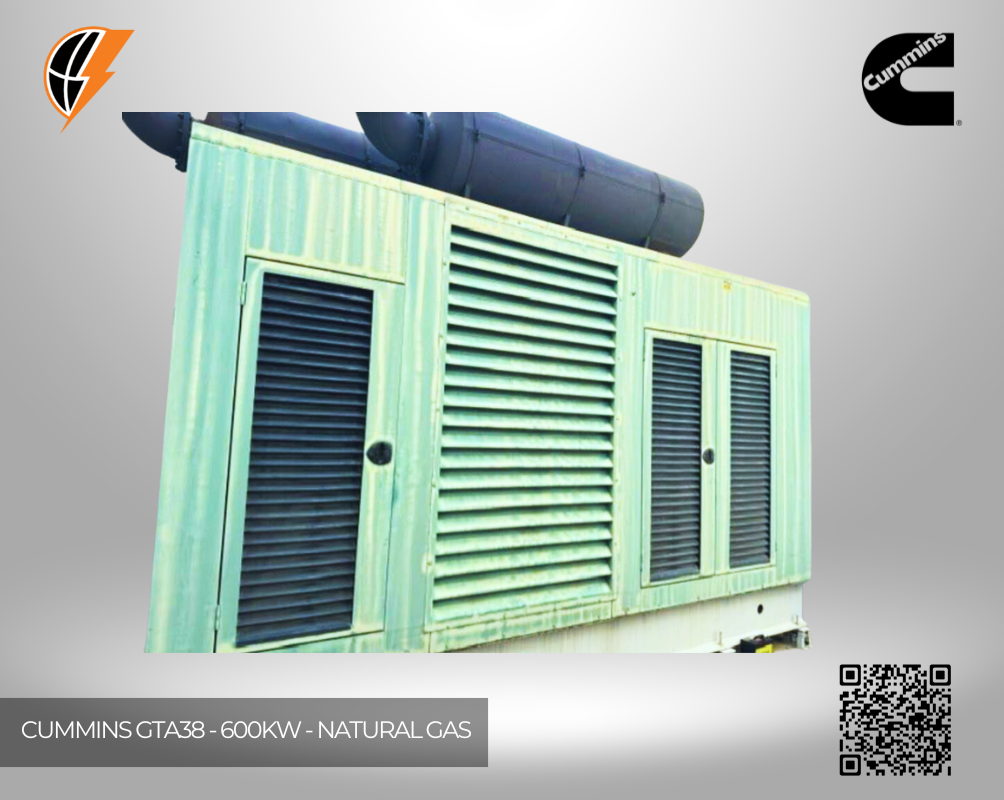
The Cummins GTA50 (600kW) and GTA38 (600kW) natural gas generators are the primary Cummins natural gas platforms in the commercial and industrial standby market. The GTA designation (Gas Turbocharged Aftercooled) indicates the high-efficiency turbocharged lean-burn combustion system that delivers CARB-compliant emissions while maintaining the fuel efficiency and power density Cummins is known for in its diesel platforms. Power Generation Enterprises stocks Cummins GTA50 600kW units with current pricing in the $75,000-$150,000 range.
The Kohler REZGT series (100kW-600kW+) is Kohler’s primary natural gas standby platform for commercial applications. The 125REZGT (125kW) is among the most widely specified natural gas standby generators in California commercial construction — its CARB certification, AQMD permit track record, and Kohler’s vertical integration (manufacturer warranty covering engine, alternator, and transfer switch from a single source) make it a low-risk specification for architects and electrical engineers. Power Generation Enterprises stocks 125REZGT units with pricing from $35,000-$70,000 depending on condition.
CHP and Cogeneration Applications
Combined heat and power (CHP) systems capture the thermal energy that a natural gas generator exhausts as waste heat and use it to displace purchased natural gas, steam, or chilled water — effectively running a natural gas generator for free when the thermal energy value is credited against fuel cost. For facilities with continuous thermal loads and high utility electricity rates, CHP is among the most compelling economic propositions in commercial building energy management.
A 500kW natural gas generator operating at full load consumes approximately 8,500 BTU/kWh of fuel input and produces approximately 1,700,000 BTU per hour of thermal energy in jacket water cooling and exhaust. At California natural gas rates, this recoverable thermal energy is worth approximately $12-18 per operating hour. For a facility running the generator 8,000 hours per year, that CHP value represents $100,000-$145,000 in annual thermal energy recovery — enough to offset a significant portion of the natural gas fuel cost for the generator itself.
The Waukesha L7042GSI, CAT G3512, and Cummins GTA series are all well-suited for CHP integration due to their high jacket water temperatures and relatively consistent exhaust temperatures across the load range. Power Generation Enterprises can advise on which natural gas generator platforms in our inventory are most compatible with CHP heat recovery systems for your specific facility thermal profile.
Natural Gas Generator Pricing Guide
Natural gas generator pricing in the used market reflects both the underlying engine platform value and the application history. Continuous-duty Waukesha units with 20,000+ hours carry lower prices per kilowatt than equivalent-hour standby CAT G-series units, but a Waukesha rebuilt to factory specs with documented service history can represent exceptional value for industrial prime power applications.
Current pricing guidance from Power Generation Enterprises inventory: Kohler 125REZGT (125kW CARB) runs $35,000-$70,000. CAT G3412 (375-450kW) runs $45,000-$95,000. Mesa Solutions 350kW portable natural gas (CARB/AQMD) runs $89,000-$120,000. Cummins GTA50 (600kW) runs $75,000-$150,000. CAT G3512 (550kW) runs $85,000-$250,000 depending on LE certification and hours. Waukesha L7042GSI (1025kW continuous duty) runs $175,000-$375,000. CAT G3520 (2500kW 12470V) is priced on request based on condition.
Call Power Generation Enterprises at +1 (818) 484-8550 for current availability and pricing on specific natural gas generator configurations. Our inventory changes regularly, and we can advise on the optimal platform for your power requirements, utility gas supply, permit situation, and operating profile.