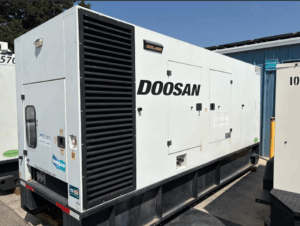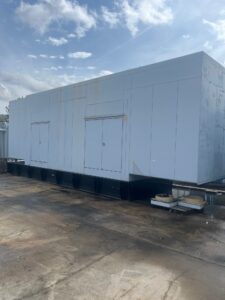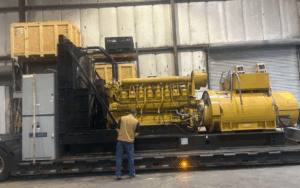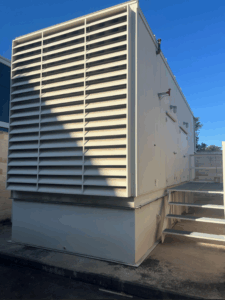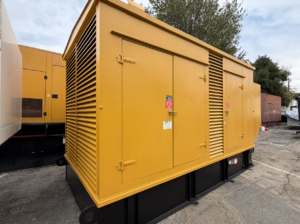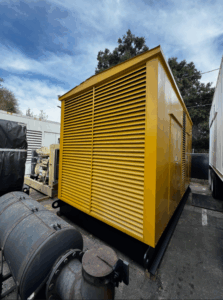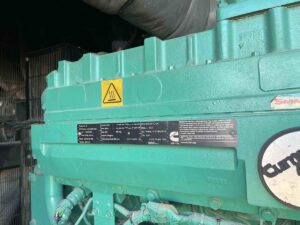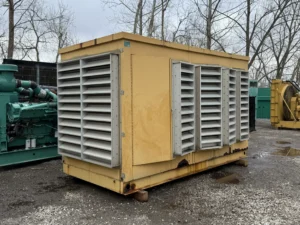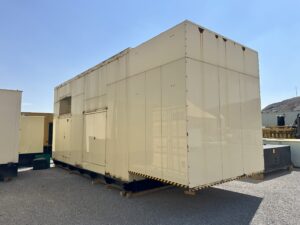
PGE buys surplus oilfield generators from operators decommissioning well sites, shutting in production, or consolidating pad operations across the Permian Basin, Bakken, Eagle Ford, and every major producing region in the Lower 48. We handle remote pickups from lease roads that don’t show up on Google Maps, and we pay based on real market data for units like the CAT 3512B, CAT 3516B, Cummins QSK60, and Waukesha gas engines. If you have iron sitting on a pad that’s not making you money, call PGE at (818) 484-8550.
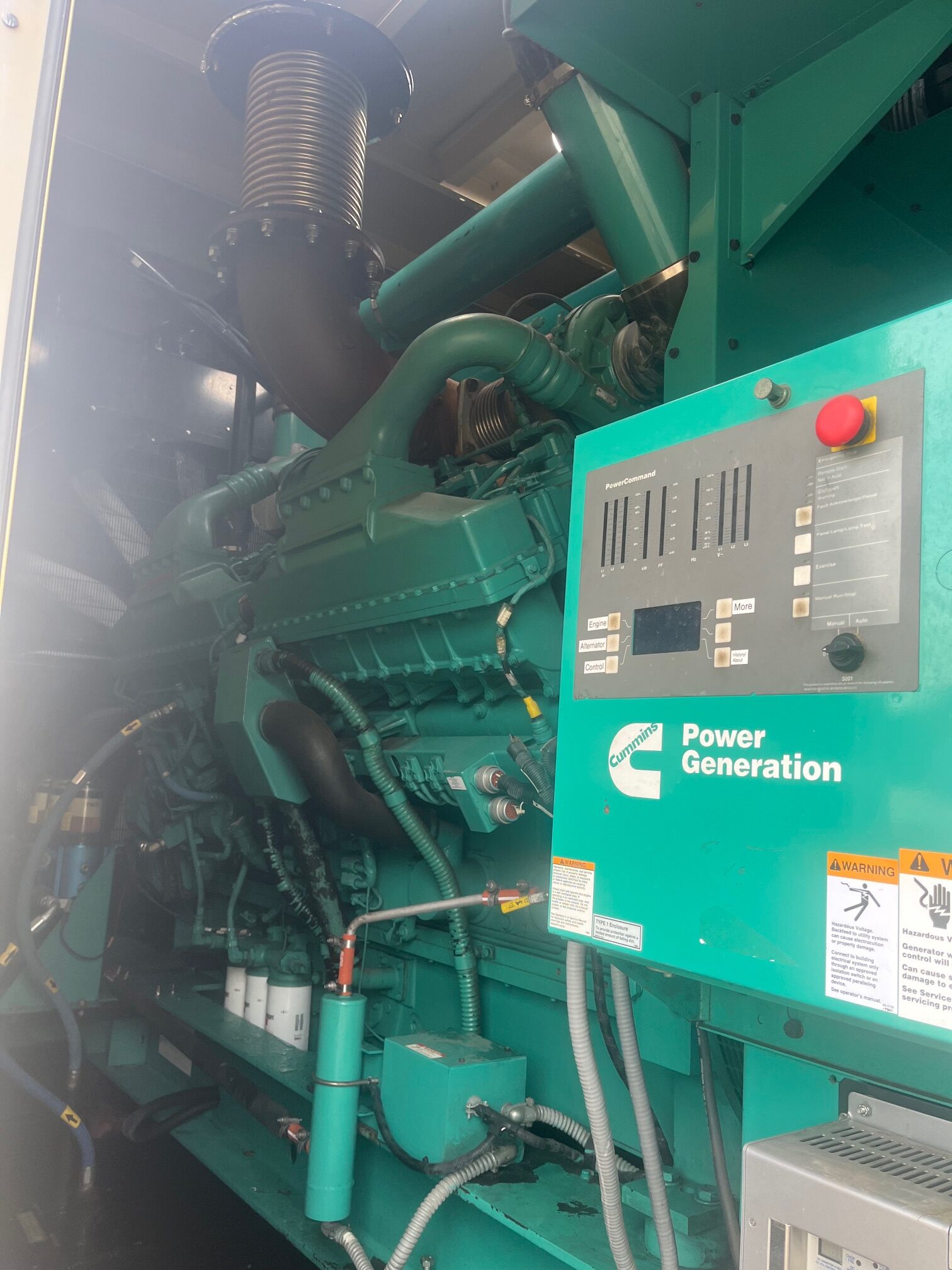
Right now, across West Texas and southeastern New Mexico, there are CAT 3512B gensets sitting on well pads that haven’t turned over in six months. Some of them ran 24/7 for three years straight powering electric submersible pumps on horizontal wells. Some were backup units for SCADA and chemical injection systems that only kicked on during grid outages. All of them are depreciating, and most of the operators who own them are too busy dealing with plugging obligations, surface reclamation, and mineral rights disputes to think about what happens to the power equipment.
We see this constantly. An E&P company runs the economics on a marginal well in the Delaware Basin, decides the LOE doesn’t justify continued production at $68 WTI, and shuts it in. The wellhead gets capped. The tank battery gets drained. The separator goes on a list somewhere. And the generator, usually a 1500kW to 2000kW diesel unit on a skid, just sits there. It sits through a summer where surface temps hit 115 degrees. It sits through a dust storm that packs fine Permian sand into every intake and cooling passage. It sits through a winter freeze that nobody bothered to winterize it for because the well was supposed to be temporary anyway.
This is not a hypothetical. This is the state of surplus oilfield power equipment across every major basin in the country right now.
The Bakken tells a similar story, just with different weather. Operators up in Williams County and McKenzie County, North Dakota, ran Cummins QSK60 units on multi-well pads during the 2014-2015 boom, pulled back during the downturn, and never decommissioned the power equipment properly. Some of those units are sitting on pads accessible only during summer months because the lease roads turn to mud in spring thaw. In the Eagle Ford down in South Texas, Dimmit and Webb counties have pad sites with CAT 3406 and 3408 units that were running artificial lift operations for wells that have since been plugged or transferred to a different operator entirely.
The rig count matters here, and not in the way the evening news talks about it. When Baker Hughes reports a decline in active rigs, that doesn’t just mean fewer holes getting drilled. It means fewer frac spreads running, fewer compressor stations at capacity, and fewer generators needed for temporary power on location. The surplus builds quietly. An operator running 200 well sites decides to consolidate to 140. That’s 60 generators that need to go somewhere, and the asset management team is usually a single person in a Midland office who also handles vehicles, trailers, and frac tanks.
The bigger story isn’t individual well shutdowns. It’s fleet rationalization. When Pioneer Natural Resources merged into ExxonMobil, when Callon consolidated with APA, when Centennial merged into Permian Resources, the combined entities ended up with overlapping equipment fleets. Two companies that each had 50 generators across their Midland Basin acreage suddenly have 100 units and only need 65. The remaining 35 get parked at a yard in Odessa or Pecos and wait for someone to figure out what to do with them.
This is where the real value destruction happens. A CAT 3512B with 8,000 hours, good maintenance records, and clean fluids is worth real money on the secondary market. That same unit after sitting in a yard for 18 months with no preservation protocol, coolant still in the block, fuel left in the day tank, and mice in the wiring harness, is worth significantly less. We’ve bought both versions. The difference in what we can pay is substantial, and it’s almost entirely a function of how long the operator waited to make the call.
The same pattern plays out in gas processing. Waukesha gas engines running on wellhead gas at processing facilities and compressor stations get sidelined when throughput drops or when a midstream company reconfigures its gathering system. Those units, often VHP or APG series engines rated between 800 and 1500kW, have a strong secondary market if they come out of service in decent shape. If they sit with sour gas residue in the fuel system for a year, the economics change fast.
We’re not here to tell anyone how to run their basin operations. But we’ve been buying generators out of oilfield applications for years, and the pattern is always the same: the operators who call early get paid more than the operators who call after the equipment has been sitting through two weather cycles. That’s not a sales pitch. That’s just how depreciation works when your asset is parked outside in the Permian Basin.
There’s a reason oilfield generators sit longer than they should, and it’s not because operators don’t know they’re losing value. It’s because selling surplus power equipment from a well site is genuinely more complicated than selling most other oilfield assets.
Start with access. A lot of these units are on locations that require landowner permission to access. The surface use agreement may have expired, the lease may have been reassigned, or the operator may have relinquished the lease entirely but still has equipment on site because the surface owner hasn’t pushed the issue yet. We’ve driven lease roads in Reeves County that hadn’t seen a truck in over a year. We’ve loaded generators from pads in Loving County where the nearest paved road was 11 miles away. Getting a lowboy and crane to these locations is not a phone call to a local trucking company. It requires planning, permits in some cases, and a crew that knows what they’re doing around oilfield equipment.
Then there’s the environmental angle. Depending on the state, decommissioning a well site generator may trigger certain reporting requirements, especially if there’s been any fuel spillage, coolant leakage, or if the unit was running on wellhead gas with H2S content. In New Mexico, the Oil Conservation Division has gotten more aggressive about surface remediation timelines. In Texas, the Railroad Commission tracks equipment removal as part of the plugging process. Operators sometimes delay selling the generator because they’re waiting on an environmental clearance or because they’re unsure whether removing the unit triggers a different compliance obligation.
And then there’s the internal friction. The field superintendent knows the generators need to go. The asset manager in the corporate office knows they need to go. But the decision requires sign-off from accounting for the write-down, legal for the bill of sale, and sometimes the landman if there’s any question about whether the equipment was included in an asset purchase agreement from a previous acquisition. We’ve had deals take four months from first contact to pickup, not because of any disagreement on price, but because the operator’s internal approval process moved at its own speed.
None of this is unique to generators, but generators are heavy, they’re full of fluids, and they’re usually the last thing to come off a pad because everything else is easier to move first. The tubing gets pulled. The rod pump gets removed. The tanks get hauled. The separator goes. And the generator sits there because it’s 35,000 pounds on a skid and nobody has scheduled the crane yet. By the time someone gets around to it, the unit has aged another season and the market has shifted.
| Generator Model | Typical Oilfield Application | kW Range | Key Value Factors | PGE Typical Offer Range |
|---|---|---|---|---|
| CAT 3512B | Primary power for horizontal well pads, ESP operations, Permian Basin workhorse | 1,500-1,750 kW | Hours, maintenance records, EMCP panel condition, cooling system integrity | $85,000-$180,000 depending on hours and condition |
| CAT 3516B | Large multi-well pads, gas processing facilities, compressor stations | 2,000 kW | Engine hours, turbo condition, aftercooler status, whether unit had major overhaul | $120,000-$250,000 depending on hours and records |
| Cummins QSK60 | Mid-size pad operations, common in Bakken and Eagle Ford, drilling support | 1,500-2,000 kW | PowerCommand control condition, injector life, coolant system, oil analysis history | $75,000-$175,000 depending on configuration |
| Cummins QSK78 | Large compressor stations, central tank batteries, gas plant backup | 2,500 kW | Overall hours, major component life remaining, switchgear condition | $130,000-$280,000 depending on application history |
| CAT 3406/3408 | Smaller well sites, artificial lift, chemical injection, rod pump operations | 300-500 kW | Age, tier rating, enclosure condition, whether trailer-mounted | $15,000-$55,000 depending on age and hours |
| Waukesha VHP/APG | Gas compression, wellhead gas processing, midstream facilities | 800-1,500 kW | Fuel system condition (sour gas exposure), head condition, ignition system | $40,000-$120,000 depending on model and gas exposure history |
We’ve loaded generators off pads in the Permian Basin in July when the ground temperature would burn through boot soles. We’ve pulled units from the Bakken in October racing the first hard freeze. We’ve driven past six cattle guards and a locked gate to reach a Cummins QSK60 on a pad in Karnes County, Eagle Ford, that the operator forgot they still owned until a landman called asking when the equipment was coming off.
This is what we do, and we’re set up specifically for it.
When an operator calls PGE about selling generators from a decommissioning project or a fleet reduction, the first thing we need is basic information: what are the units, where are they, what condition are they in, and what’s the access situation. We don’t need a formal RFP. We don’t need a PowerPoint deck. A phone call with the field supervisor who actually knows what’s on location is worth more than a spreadsheet from corporate that lists assets by accounting codes.
For the equipment itself, we need model and serial numbers, hour meter readings if available, and any maintenance history. A CAT 3512B with a known history from a major operator that runs a preventive maintenance program is a different animal than the same model from a small private operator that ran it until something broke and fixed it with whatever parts were in the truck. Both have value. But the first one is worth more, and we can usually pay faster because there’s less we need to verify.
A lot of equipment buyers will tell an oilfield operator to deliver the generator to a yard or a loading dock. That’s not realistic for most well site equipment. These units are on skids or trailers, often on unpaved locations, sometimes without power to even start the unit for a test run. PGE handles the logistics. We arrange the crane, the lowboy, and the transport. We’ve worked with trucking companies across West Texas, the DJ Basin in Colorado, the Anadarko Basin in Oklahoma, and up through the Williston Basin in North Dakota. If there’s a road to the pad, we can get to it.
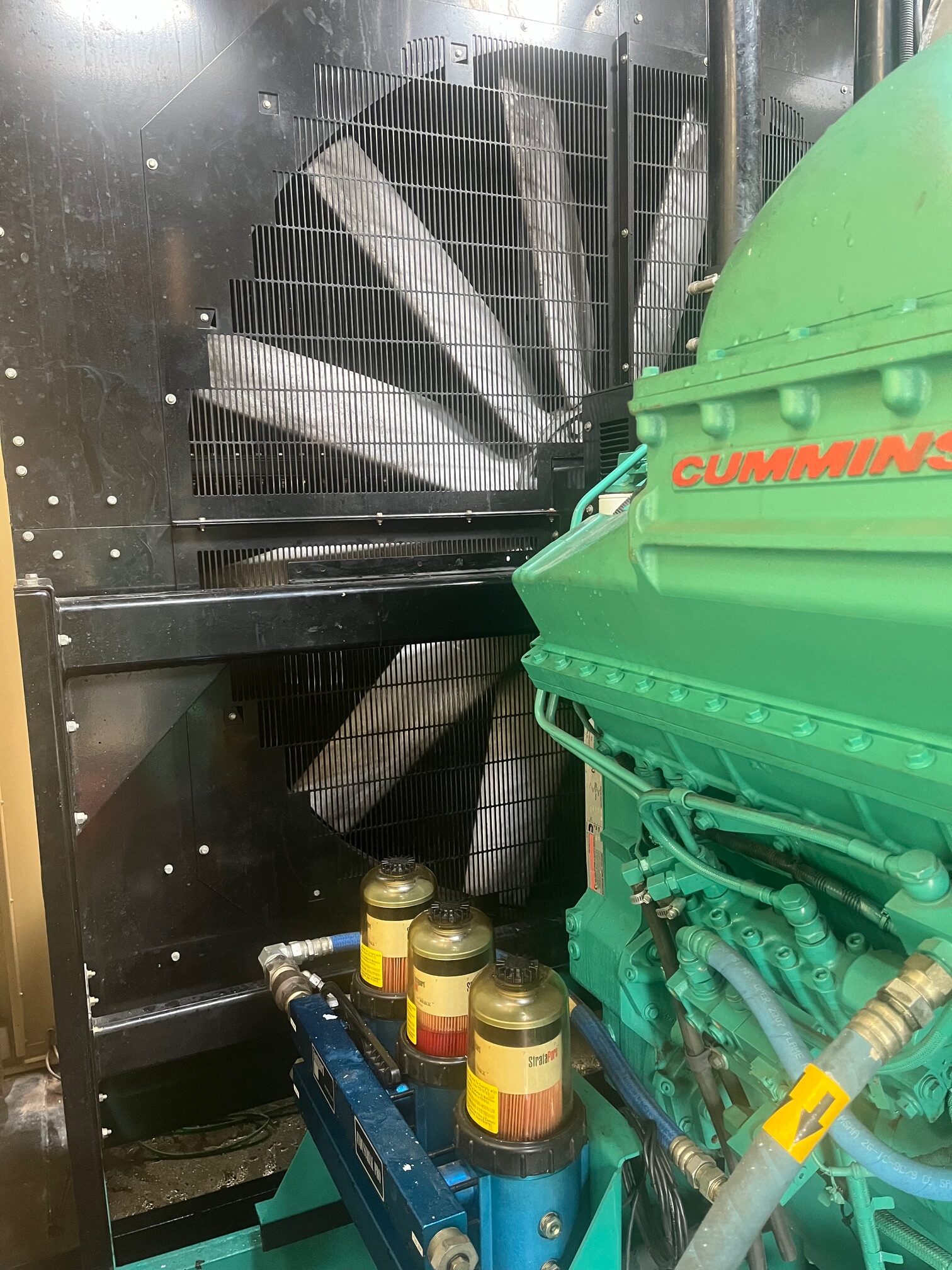
We also deal with the reality of what oilfield service does to generators. A unit that spent three years on a pad in Ward County, Texas, is going to look different than one that ran in a climate-controlled building. The radiator will have sand packed in the fins. The air filtration system will show the wear of Permian dust. The enclosure panels, if it has an enclosure, will have UV damage and possibly some corrosion from H2S exposure if the unit was near a sour well. None of this necessarily kills a deal, but it affects value, and we’re honest about that upfront.
Four things drive the price we pay for an oilfield generator: the model, the hours, the condition, and the documentation. That’s it. Everything else is secondary.
Model matters because demand is not equal across all units. A CAT 3512B in the 1500-1750kW range is the single most liquid generator on the secondary oilfield market. There are buyers worldwide for that unit. A Cummins QSK60 at 2000kW has strong demand domestically and in Latin American markets. A CAT 3516B at 2000kW commands a premium because of its versatility in both prime and standby applications. On the other end, older CAT 3406 and 3408 units in the 300-500kW range still move, but the buyer pool is narrower and the pricing reflects that.
Hours are straightforward but nuanced. A unit with 6,000 hours is generally worth more than one with 20,000 hours, but a 20,000-hour unit that just had a major overhaul with documentation is potentially worth more than a 10,000-hour unit with no records. The hour meter itself is only useful if it’s been running accurately. We’ve seen units where the meter was replaced and nobody logged the prior hours. We’ve seen units where the meter reads 4,000 hours but the engine wear suggests double that. Our evaluation accounts for this.
Condition is where the oilfield environment shows up. We inspect cooling systems for sand damage and scale buildup. We check fuel systems for contamination, especially on units that ran on field gas or sat with fuel in the tank. We look at the electrical systems, the switchgear, the control panels. A generator is a system, not just an engine, and the components around the engine affect the value significantly. A 3512B with a functional Caterpillar EMCP 4.2 control panel is worth more than the same engine with a fried panel because that panel costs $15,000 to $25,000 to replace.
Documentation is the multiplier. We cannot overstate this. If you have maintenance records, oil sample results, the original build sheet, and the last service report, your generator is worth measurably more than an identical unit with no paperwork. For operators with a CMMS system like Maximo or SAP PM, pulling those records before calling us will directly affect the number we quote. If records are lost, that’s not a dealbreaker, but it means we have to factor in more unknowns, and unknowns cost money in the secondary market.
Some operators just need the iron gone. They’re under a timeline from the surface owner, or they need to close out a field office, or the well site decommissioning has a regulatory deadline. We can move fast when needed. We’ve closed deals and had equipment picked up within two weeks of first contact.
But if you have some flexibility on timing, a little preparation goes a long way. Getting the hour meter reading, pulling whatever records exist, draining fluids if the unit is going to sit before pickup, and taking clear photos of the nameplate, the engine, the generator end, and the overall condition of the enclosure. These things don’t cost much time, and they directly affect what we pay. We’ve outlined more about how our buying process works and how asset recovery fits into larger decommissioning projects on those pages.
For operators decommissioning multiple sites, we buy in quantity. If you’re pulling 10 or 15 generators off pads across a basin, we’ll price the package and handle logistics across all locations. This is common during corporate consolidations, field office closures, and when an operator exits a basin entirely. The economics work better for everyone when we can plan a multi-site pickup route rather than making individual trips.
Yes, but we’ll need you to coordinate surface access with the current lease holder or surface owner. This comes up frequently when an operator exits a basin and equipment removal lags behind lease termination. As long as we have legal access to the location and a clear chain of title on the equipment, we can handle the pickup. If there’s a dispute about equipment ownership due to an asset purchase agreement from a prior transaction, get that resolved with your landman first.
It changes the inspection priorities but not our interest in buying. Natural gas units, especially Waukesha engines and CAT units converted to run on field gas, have different wear patterns. We look at the fuel system for sour gas damage, check the heads and valves for the effects of variable BTU content, and assess whether the unit was running on properly conditioned gas or raw wellhead gas with liquids. Units that ran on properly treated gas hold value well. Units that ran on wet, sour gas with no conditioning need more evaluation.
We factor in the preservation status. Was the coolant drained or left in? Was the fuel system preserved or did diesel sit in the tank and day tank? Were intake and exhaust openings covered? A unit that sat for 18 months with proper layup procedures is very different from one that was just abandoned. We’ll typically need to do a more thorough inspection, and the offer will reflect the cost of returning the unit to a marketable condition. That said, we buy plenty of these units. We’re not going to walk away because it sat through a couple of seasons.
That’s exactly the kind of project we’re set up for. Multi-site pickups across a basin are more efficient for everyone. We’ll quote the entire package, plan a pickup route, and handle crane and transport logistics across all locations. We’ve done multi-site pickups across the Permian, the Bakken, and the Eagle Ford. Give us a spreadsheet with locations, models, and serial numbers and we’ll turn around a package quote within a few business days. More detail on bulk asset recovery is on our [asset recovery page](/asset-recovery-industrial-generators/).
At minimum, we need a bill of sale and proof of ownership. For corporate sellers, this usually means a certificate of title or an internal asset disposition form signed by someone with authority to sell. If the generators were part of an acquisition, we may need documentation showing the chain of title. We handle the transport paperwork, permits, and logistics from our end. For [data center decommissioning projects](/data-center-generator-decommissioning-asset-recovery/) or cross-industry sales, the same documentation standards apply.
Yes. We buy non-running units regularly. A CAT 3512B that needs injectors and a turbo rebuild still has significant value because the block, the generator end, and the frame components are all worth money. We’ll adjust the offer based on the estimated repair cost, but a non-running unit is not a worthless unit. Provide whatever diagnostic information you have. If the field mechanic knows it threw a rod or if there’s a known coolant leak into the cylinders, tell us upfront. It helps us quote accurately and avoids surprises during pickup.
PGE buys Caterpillar and Cummins oilfield generators from operators across the Permian Basin, Bakken, Eagle Ford, and every major producing region. We handle remote pickups, multi-site logistics, and units in any condition. Call (818) 484-8550 or submit your equipment details below for a quote within 48 hours.