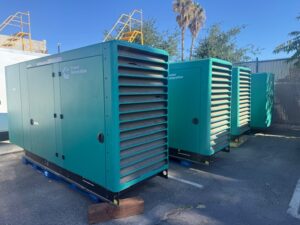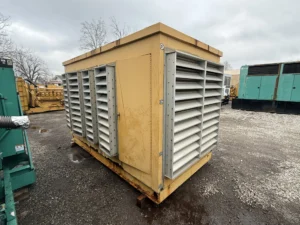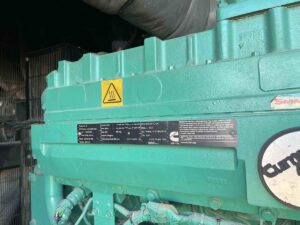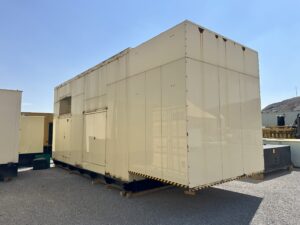
Industrial generators lose 15-30% of their resale value for every year they sit idle after decommissioning. Power Generation Enterprises has recovered over $40M in asset value for facilities teams managing surplus power equipment — from single-unit dispositions to full fleet liquidations across multiple sites. This guide breaks down how to structure generator asset recovery for maximum financial return, including depreciation timing, documentation for audit trails, and the real difference between selling direct versus auction. Call PGE at (818) 484-8550 for a confidential valuation on your surplus units.
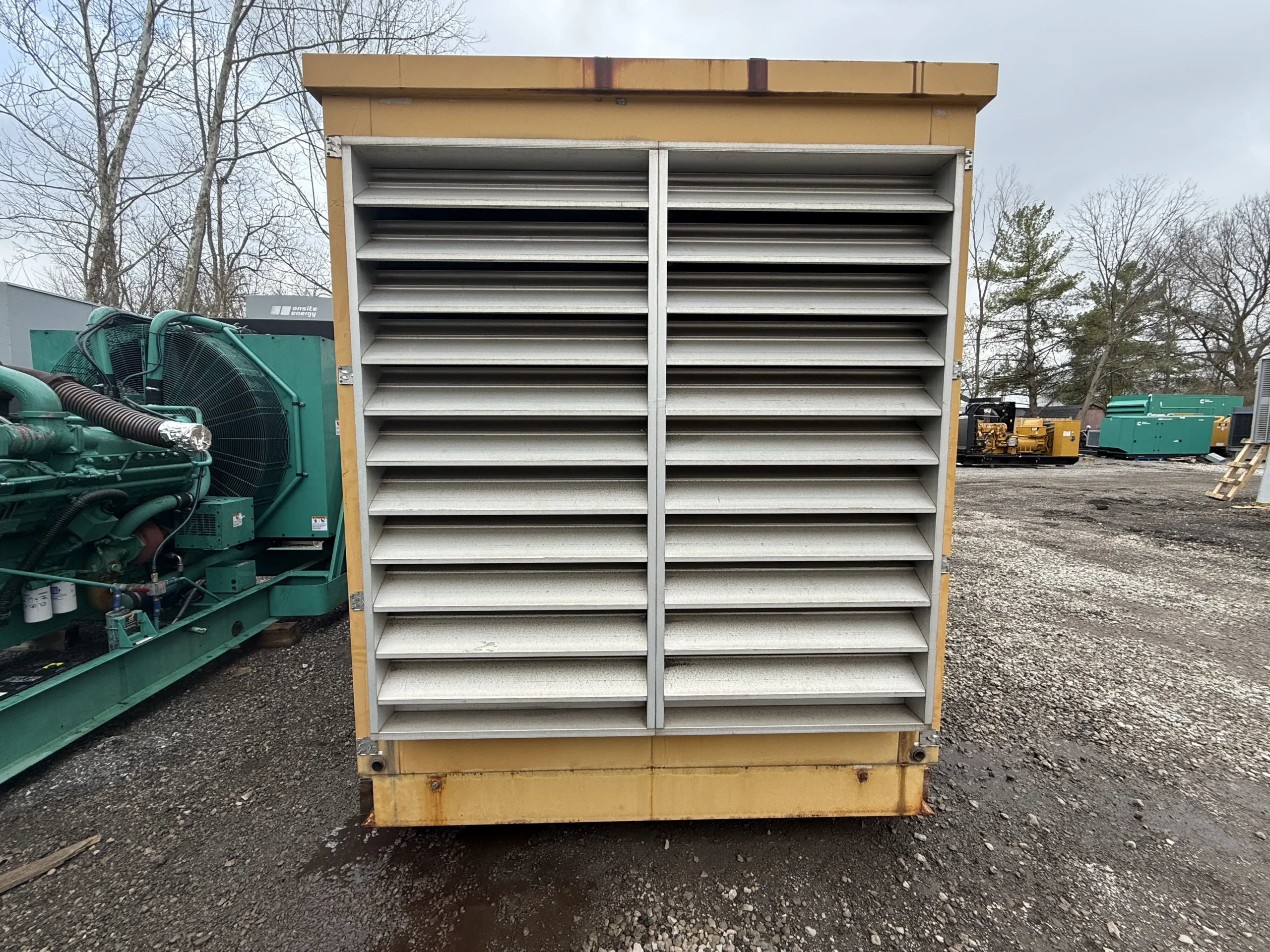
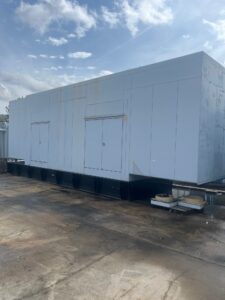
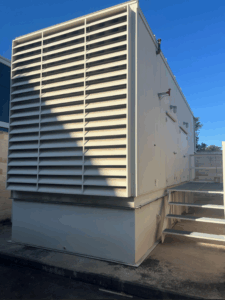
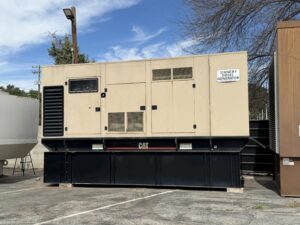
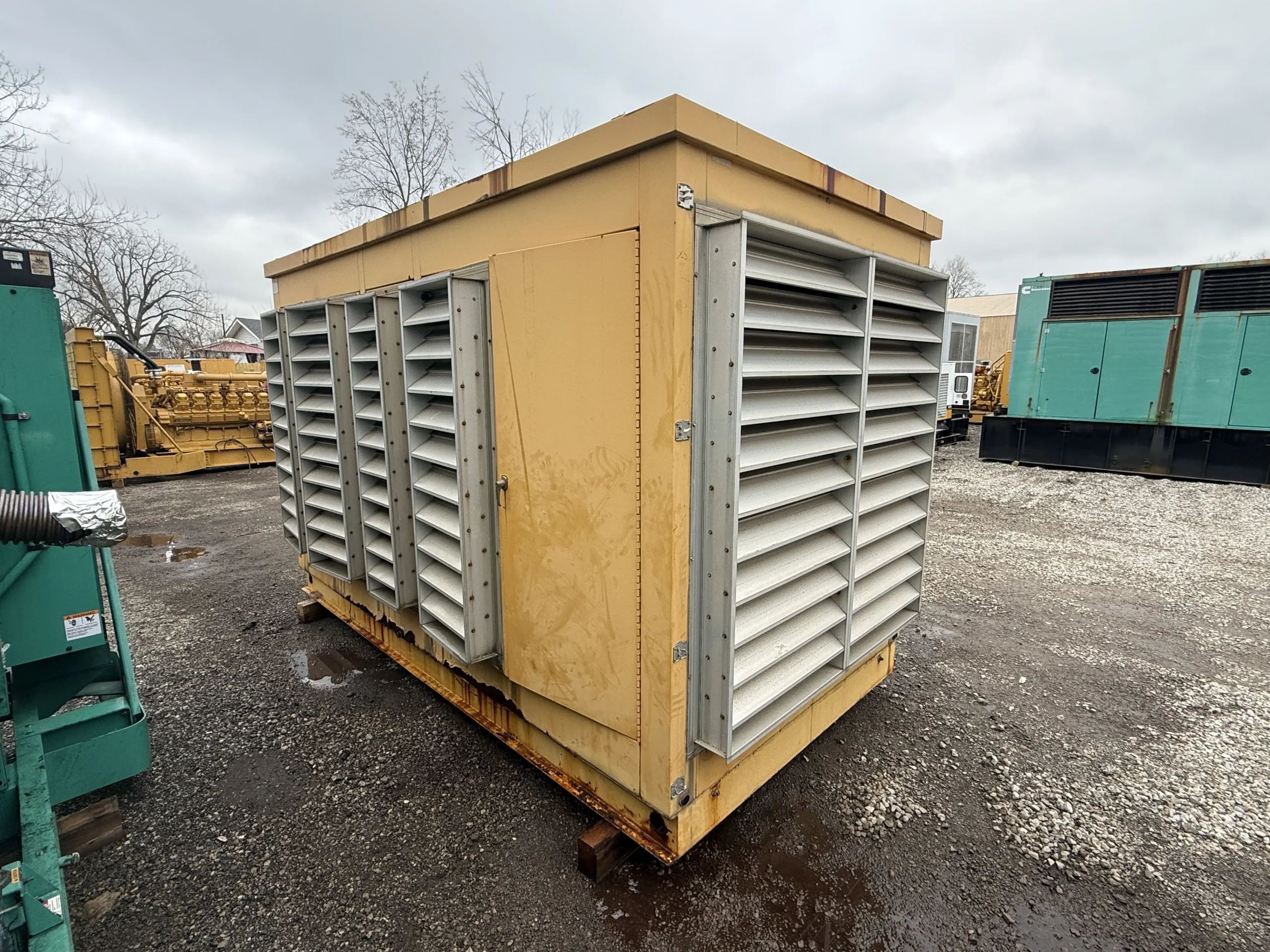
Here is a scenario we see regularly. A manufacturing company consolidates operations and ends up with five or six Caterpillar and Cummins generator sets — ranging from 800kW to 2000kW — sitting on concrete pads at the old facility. The units sit there for six to twelve months. Insurance runs several thousand dollars a month. The lease on the pad space adds more. Somebody forgets to tarp one of the Cummins QSK60 units and the control panel takes weather damage.
By the time the facilities team calls PGE, those generators have racked up six figures in carrying costs alone — not counting the depreciation hit. That number shocks people, but it is routine. We see it constantly from corporate facilities teams who treat surplus generators as a low-priority line item until the CFO starts asking questions.
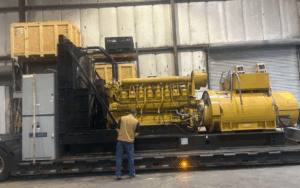
Here is the math that most asset recovery plans miss: a well-maintained CAT 3516 DITA rated at 1850kW holds strong resale value in the secondary market, typically recovering 40-55% of original acquisition cost if sold within the first two years of decommissioning. Wait three years, and that number drops to 25-35%. Wait five, and you are looking at scrap-plus pricing — maybe 10-15% — because the controls are outdated, the fuel system components have degraded, and buyers assume the worst about maintenance history.
The generators do not get more valuable sitting there. They get less valuable, and they cost you money every month they remain on your books.
This is where asset recovery for generators diverges sharply from other equipment categories. A CNC machine or a commercial HVAC system depreciates in a fairly predictable curve. Generators do not follow that pattern, because demand in the secondary market is driven by factors that have nothing to do with your depreciation schedule.
Take a Cummins DQKAB with a QSK60 engine block rated at 2000kW. On your books, after seven years of MACRS depreciation, it might show a book value near zero. On the secondary market, that same unit — if it has been load-bank tested, has documented maintenance records, and runs on a common fuel configuration — could sell for $180,000 to $280,000 depending on hours, enclosure condition, and whether the transfer switch is included.
The inverse is also true. We have seen companies carry a generator at $350,000 book value because they bought it during a supply crunch in 2022, when lead times for new Caterpillar units exceeded 52 weeks and the secondary market was inflated by 30-40%. That same CAT 3412C 800kW enclosed unit might realistically bring $95,000 to $140,000 in a normalized market. If your asset recovery plan assumes book value equals market value, you are going to have a bad conversation with your auditors.
PGE provides written fair market value appraisals that hold up to audit scrutiny. We base these on actual transaction data — not published price guides, which lag the market by six to twelve months and do not account for regional demand variations. A 450kW natural gas unit like a CAT G3412 has very different demand dynamics in California versus Texas versus the Northeast, and a credible appraisal reflects that.
Most industrial generators fall under MACRS 15-year or 20-year property classes for tax depreciation, depending on how they were classified at acquisition. If your team took bonus depreciation under Section 168(k) — which was common for units purchased between 2018 and 2023 — the full cost may have already been expensed in year one. That changes the disposition calculus significantly.
When a fully depreciated asset sells for $200,000, that entire amount is recaptured as ordinary income under Section 1245. There is no capital gains treatment here. For a company in the 21% corporate bracket, that is $42,000 in federal tax liability on the sale. This is not a reason to avoid selling — the alternative is paying carrying costs on a depreciating asset that will sell for less next year — but it does mean the timing matters.
The smart move is to coordinate generator dispositions with your tax team and align them with fiscal year planning. If your company has capital losses from other equipment sales or write-downs, offsetting the recapture income against those losses can reduce the net tax impact substantially. We have worked with procurement teams who specifically timed multi-unit sales across Q4 and Q1 to split the recapture across two tax years.
PGE can close transactions on your timeline. We have completed deals in as few as five business days when the seller needed to hit a fiscal year deadline, and we have held pricing commitments for 60 days when a corporate team needed board approval before proceeding. The point is that asset recovery is a financial decision first, and the logistics of actually moving the generators are secondary to getting the financial structure right.
One more thing worth noting: if a generator is sold at a loss relative to its adjusted book value, that loss is deductible. Companies that overpaid for generators during the 2021-2022 supply crisis may actually benefit from selling now at current market prices, because the recognized loss offsets other taxable income. Your tax advisor can model this, but PGE’s appraisal gives them the market value number they need to run the analysis.
| Disposition Method | Typical Recovery Rate | Timeline to Payment | Risk Level | Best Suited For |
|---|---|---|---|---|
| Sell Direct to PGE | 45-65% of original cost | 15-25 business days | Low — firm pricing upfront | Standard industrial gensets 500kW-2500kW from major OEMs, multi-unit fleet dispositions |
| Auction House | 25-55% of original cost | 60-120 days after consignment | High — no price guarantee, market-dependent | Unique or specialty equipment, seller not time-sensitive |
| Equipment Broker | 35-55% of original cost | 90-180+ days, if it sells | Medium — commission reduces net, no sale guarantee | Niche or hard-to-value configurations, seller willing to wait |
| Scrap / Salvage | 5-12% of original cost | 7-14 days | Low — but recovery is minimal | Units with major mechanical failure, obsolete controls, fire/flood damage |
| Leave in Place (Do Nothing) | 0% and declining | N/A — carrying costs accumulate | High — insurance, depreciation, site costs erode value monthly | Never the right answer, but the most common one |
Single-unit sales are straightforward. You have a generator, PGE makes an offer, we pick it up, you get paid. But corporate asset recovery rarely involves a single unit. The typical deal we see from facilities teams and procurement departments involves three to twelve generators across one or more sites, often with different manufacturers, different kW ratings, and different conditions.
Last quarter, we closed a deal with a national data center operator that was decommissioning standby power at three facilities — one in Northern Virginia, one in Dallas, and one in Hillsboro, Oregon. The package included eight Cummins units (mix of QSK60 2000kW and QSK45 1500kW), four MTU 16V4000 2000kW sets, and two older CAT 3516B units. We purchased all fourteen generators in a single transaction with one master agreement, one wire transfer, and PGE-coordinated rigging and transport from all three sites.
That is what direct-buyer asset recovery looks like at scale. No auction fees. No broker splits. No waiting 90 days to find out what your equipment actually sold for. PGE provided a written offer within five business days of receiving the equipment list, and we closed within 30 days of signed agreement.
For multi-unit deals, PGE assigns a dedicated project manager who handles the logistics end-to-end: scheduling rigging crews, arranging heavy-haul transport, coordinating with your site managers on access windows and crane placement, and managing all the environmental compliance documentation (fuel drainage, coolant recovery, oil disposal manifests). Your facilities team does not need to become experts in generator decommissioning — that is our job.
We also structure deals flexibly based on what the seller needs. Some companies want a single lump-sum purchase of the entire fleet. Others prefer unit-by-unit pricing because different generators sit on different cost centers or legal entities within the corporate structure. We have done deals where we purchased six units from one subsidiary and four from another, with separate purchase agreements and separate payments, all coordinated under one project umbrella.
This distinction matters more than most procurement teams realize, and it directly affects your recovery rate.
When you list generators with an auction house — whether it is a live industrial auction or an online platform — you are accepting price discovery risk. The auction house does not guarantee a price. They take their 10-20% buyer’s premium (which suppresses what buyers are willing to bid), and you pay a seller’s commission on top of that. If the auction falls on a week when three other data centers are also liquidating Cummins 2000kW sets, your recovery rate drops. We have seen auction results come in at 60% of what PGE would have paid direct, and the seller had no recourse.
Equipment brokers operate differently but have their own cost structure. A broker lists your generator on their website and their network, takes a 10-15% commission when it sells, and may take three to six months to find a buyer — or may never find one at all. During that time, you are still paying insurance, still paying for site security, and still watching the asset depreciate. Brokers also typically do not handle logistics, so you are responsible for rigging, transport, and environmental compliance on your end.
PGE is a direct buyer and end-user dealer. We purchase generators with our own capital, take title at closing, and resell through our own inventory channels. That means we can offer firm pricing upfront, close quickly, and handle all removal logistics. Our overhead on the transaction is lower than a broker’s commission or an auction house’s combined fees, which means more of the recovery value goes to you.
We are not the right fit for every situation. If you have a rare or highly specialized unit — a hydrogen-ready generator, a custom-engineered paralleling switchgear package — an auction or specialized broker might find a niche buyer willing to pay a premium that exceeds what PGE would offer. But for standard industrial gensets from Caterpillar, Cummins, and MTU in the 500kW to 2500kW range, direct sale to a dealer like PGE consistently delivers the best combination of recovery rate, speed, and simplicity.
Corporate asset dispositions require documentation that holds up to internal audit, external audit, and in some cases regulatory review. PGE provides a complete documentation package with every transaction:
A formal purchase agreement that specifies each unit by serial number, model, kW rating, and agreed price. A bill of sale transferring title. A fair market value appraisal letter suitable for tax reporting. Transport and chain-of-custody documentation showing when each unit left your site and where it went. Environmental compliance certificates for fuel, oil, and coolant handling during decommissioning.
For companies subject to SOX compliance, we provide documentation in formats compatible with standard ERP systems and can work directly with your accounting team to ensure the asset disposition is recorded correctly. We have provided supporting documentation for Big Four audit firms on multiple occasions — this is not unfamiliar territory for us.
If your generators were acquired through a capital lease or are subject to lien, PGE can work with your legal and finance teams to structure the sale correctly, including coordinating lien releases and lease buyout timing. We have closed deals involving UCC filings, equipment leasing companies, and bankruptcy estates. The paperwork adds complexity but does not change the fundamental transaction.
The fastest way to start is to send PGE a list of what you have. We need: manufacturer, model, kW rating, fuel type, approximate hours (if known), year of manufacture or installation, and whether units are enclosed or open-skid. Photos help but are not required for an initial estimate.
Email that list to [email protected] or call (818) 484-8550. We will typically respond with preliminary pricing within 48 hours for standard units. For larger packages or units that need on-site inspection, we will schedule a site visit — PGE covers travel costs for site inspections on multi-unit deals.
Once pricing is agreed, our standard process runs about 15-25 business days from signed agreement to wire transfer. That includes scheduling rigging, arranging transport, and completing the physical removal. For companies on a tight fiscal year deadline, we have compressed that timeline to under 10 business days with advance planning.
If you are early in the process — maybe you know a plant closure or data center decommissioning is coming in six months but have not started the asset recovery planning yet — call us anyway. Early engagement lets us help you sequence the disposition for maximum tax advantage and ensures we have rigging crews and transport lined up when you need them. We have held pricing commitments for up to 90 days for corporate clients who need time to navigate internal approvals.
PGE has purchased over $40 million in used generator equipment. We know what these machines are worth, we close with our own capital, and we do not waste your time. Start with a list and a phone call.
PGE provides a complete audit-ready documentation package: a formal purchase agreement identifying each unit by serial number, model number, and kW rating with individual pricing; a bill of sale transferring title; a fair market value appraisal letter suitable for tax reporting and insurance purposes; environmental compliance certificates covering fuel drainage, coolant recovery, and oil disposal; and transport chain-of-custody records. We have provided this documentation to Big Four audit firms and are familiar with SOX compliance requirements for asset dispositions.
If the generators are fully depreciated under MACRS (which is common if you took Section 168(k) bonus depreciation), the entire sale price is recaptured as ordinary income under Section 1245 — not capital gains. For a company in the 21% federal bracket, a $200,000 sale creates $42,000 in federal tax liability. However, if you sell at a loss relative to adjusted book value, that loss is deductible against other income. PGE’s fair market value appraisal gives your tax team the number they need to model the optimal timing.
Yes, multi-site deals are a core part of our business. We recently purchased fourteen generators from a data center operator across facilities in Virginia, Texas, and Oregon — all under one master agreement with one payment. PGE assigns a dedicated project manager who coordinates rigging crews, heavy-haul transport, site access scheduling, and environmental compliance at each location. Your facilities team gets a single point of contact instead of managing multiple vendors across multiple states.
For standard industrial generators from Caterpillar, Cummins, or MTU, PGE provides preliminary pricing within 48 hours of receiving your equipment list. From signed purchase agreement to wire transfer, the typical timeline is 15-25 business days, which includes scheduling rigging, arranging transport, and completing physical removal. We have compressed this to under 10 business days for companies facing fiscal year deadlines, and we can hold pricing commitments for up to 90 days for corporate clients working through internal approval processes.
Yes, but the lease must be addressed as part of the transaction. PGE has experience working with equipment leasing companies and can coordinate with your legal and finance teams on lease buyout timing and lien releases. We have closed deals involving UCC filings, active leases, and even bankruptcy estates. The key is to engage your leasing company early — most will cooperate on a buyout if the sale proceeds cover the remaining lease balance, and PGE can provide the fair market value documentation they need to evaluate the transaction.
Generator decommissioning involves handling diesel fuel, engine oil, and coolant — all of which are regulated materials. When PGE purchases and removes generators, we manage all environmental compliance as part of the removal process, including fuel drainage, coolant recovery, and oil disposal with proper manifesting. We provide environmental compliance certificates documenting that all materials were handled according to EPA and state regulations. This transfers the immediate handling liability and gives your environmental compliance team the documentation they need for their records.
Send PGE your equipment list — manufacturer, model, kW rating, fuel type, and approximate hours — and we will return preliminary pricing within 48 hours. No obligation, no broker fees, no auction risk. Just a direct offer backed by over $40 million in completed generator purchases.