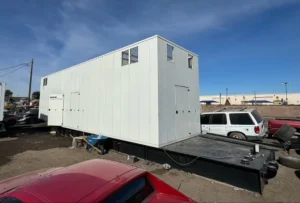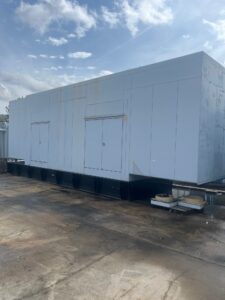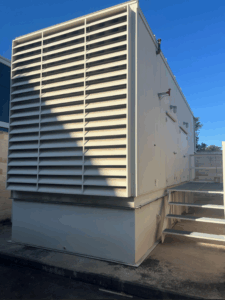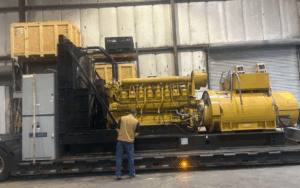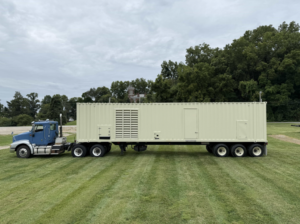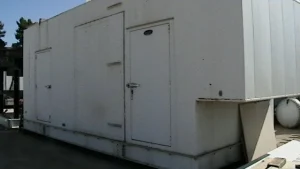
Most surplus generators sell for far less than they’re worth — not because of the machine, but because the seller didn’t know what buyers actually value. Power Generation Enterprises buys used industrial generators direct, nationwide, from 50kW up to 3,000kW+. No auction commissions, no months of tire-kicker inquiries. We look at hours, maintenance records, fuel system condition, controls, and physical access — and we make written offers within 24–48 hours. If you have a unit to move, call us at (818) 484-8550 or start with our sell your equipment page.
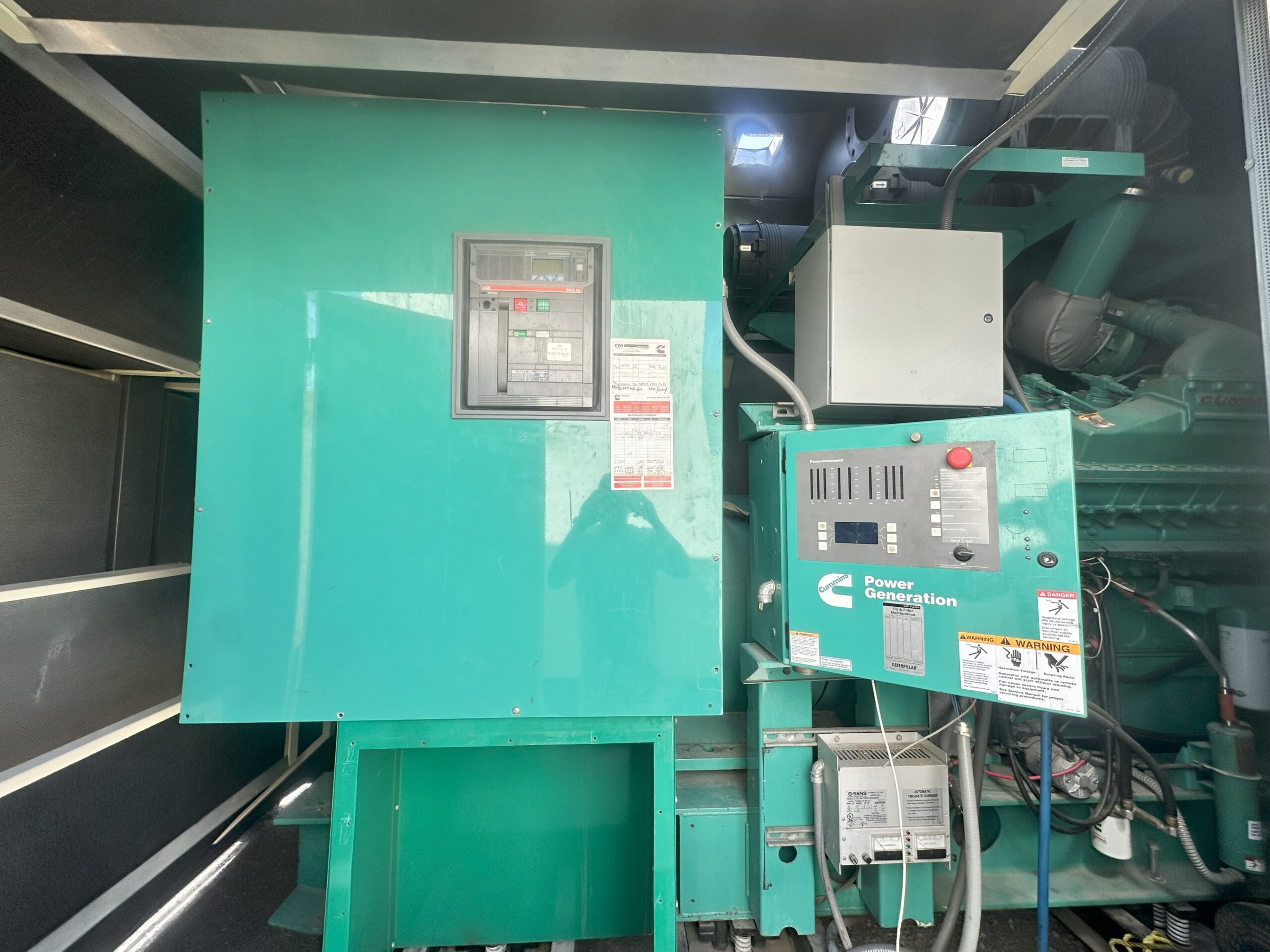
We’ve bought a lot of generators at auction. We’ve also bought a lot directly from facility managers, decommissioning contractors, and plant managers who called us first. The auctions are useful — for us. They’re rarely the best outcome for the seller.
Here’s the math that most sellers don’t know going in. Iron Planet and Ritchie Bros. both charge a buyer’s premium of 12–15% on top of the hammer price, and a seller’s commission of 7–9% on the gross. So if your CAT 3516 sells for $95,000 on the block, you might net $87,000 after the seller’s commission — and the buyer paid over $108,000 all-in. You both gave the auction house roughly $21,000 in the middle. That’s real money.
Then add the timeline. Auctions run on the auction’s schedule, not yours. You might wait 6–10 weeks for the right event, sit through the listing process, and still watch the unit sell low if the right buyers aren’t in the room that day. We’ve picked up CAT 3512s at auction for $40,000 that the seller could have gotten $55,000 for directly — simply because we were the only serious buyer online that afternoon.
Private listings have a different problem. Sites like Machinio, Equipment Trader, and (God help you) Craigslist will bring in inquiries. Some of them are from real buyers. Most are from brokers looking to flip, dealers gathering market data, and the occasional person who “just wants to see what you’ve got.” A private listing on a 1,000kW standby unit typically takes 3–6 months to close. You’re fielding calls, sending photos, answering the same questions about hours and transfer switch configuration, and watching the unit depreciate while it sits in your yard.
Direct dealer sale is faster and cleaner. When we’re interested in a unit, we move. We do our evaluation, make an offer, and close. The wire hits your account. We handle the rigging and freight — that’s our cost, not yours.
If you want to compare the numbers before you decide, our asset recovery guide walks through the full channel comparison. But the short version: for units above 250kW with documentation, direct dealer sale wins almost every time.
When we drive out to look at a unit, we’re running through the same checklist every time. It’s not a mystery. Here’s what we actually look at, and why each item matters.
1. The nameplate and model number. This is the starting point. We need the full model number, serial number, and rated output — not what the previous owner told you, the actual data plate on the unit. A CAT 3516 at 1,825kW and a CAT 3516 at 2,250kW are not the same machine. If the data plate is painted over, corroded, or missing, that’s an immediate discount. We can’t certify the unit’s rating to our customer without it, and that translates directly into a lower offer.
2. Engine hours. Lower hours mean higher value. Full stop. But context matters. A Cummins QSK60 with 4,000 hours that ran standby at a hospital and has complete oil analysis records is a different machine than a QSK60 with 2,500 hours that ran prime at a construction site in rough conditions with no records. We’ve paid more for the higher-hour, better-documented unit.
3. Maintenance records and service history. This is where we separate the $40,000 offers from the $60,000 offers. A unit with annual service records from a licensed technician, oil and coolant analysis reports, and a recent load test document is a unit we can sell with confidence. We can show our customer the paper trail. Without that paper trail, we have to assume the worst — and price accordingly.
4. Control system and transfer switch. Is the controller functional? Do you have the password? We’ve walked away from more than one deal because the ATS controller was locked and the original service contractor was out of business. Kohler, CAT, Cummins, and MTU units all have digital controls that require credentials to access and program. If that access is gone, the new owner faces a reprogram cost that can run $2,000–$5,000 depending on the system. We factor that into the offer.
5. Fuel system condition. Diesel fuel degrades. After 12–18 months in a tank without treatment, you’re dealing with microbial growth, oxidation, and water accumulation. We’ve pulled samples from tanks that looked clean on the surface and found fuel with a dark brown haze and visible sediment. Fuel polishing costs $1,500–$4,000 for a large tank, and that’s before you deal with injector or pump damage from running contaminated fuel. If the unit has been sitting with untreated fuel for 2+ years, we need to know, and we’ll adjust.
6. Physical condition and access. Is the unit indoors, outdoors, under a canopy? What’s the condition of the enclosure if it’s housed? Is there forklift or crane access, or is this a rigging job? We’ve bought units that required a 150-ton crane and $18,000 in rigging to get out of a building. That cost comes off the offer. A unit in an open yard with a concrete pad and forklift access is worth more to us in practical terms than the same unit buried in a server room basement.
7. Brand and parts availability. CAT and Cummins hold value best because parts are everywhere and technicians are everywhere. MTU/Detroit Diesel units — particularly the older 2000-series — hold strong value when they’re in good condition, but parts sourcing requires more expertise. Doosan (formerly Daewoo) units have grown in the U.S. market and we buy them regularly. Waukesha gas-powered units are a specialty buy; the market is narrower, but the right unit finds a buyer. Kohler standby units, especially the 1000REOZM and 2000REOZMD, move well in the data center market. Tier 4 Final units carry a premium when clean — more on that below.
For data center managers and IT directors looking to move surplus backup power, our data center decommissioning guide goes deeper on what the secondary market looks like for that specific segment right now.
We’ll say the number plainly: documentation is worth $5,000 to $15,000 on a mid-range industrial unit. We have proof of this from our own buy history.
Last year we paid $48,500 for a Cummins QST30 with 240 hours. Full service logs from day one, two oil analysis reports showing clean results, a load test report from eight months prior showing the unit hit nameplate output, original spec sheet, and the ATS records. We knew exactly what we were getting. That unit moved fast.
A few months earlier, we saw the same QST30 platform — similar vintage, 310 hours — at a facility where the maintenance team had turned over twice. The logs existed somewhere, but nobody could find them. The load test had been done “a couple years ago” but no report. The ATS had been serviced but no records. We offered $31,000. That’s a $17,500 gap on nearly identical machines, driven entirely by paperwork.
Here’s what we want to see, in order of impact:
If you’re a facility manager or decommissioning PM getting ready to move a hospital emergency generator, the documentation stack is even more important because those units were maintained under regulatory requirements. That paper trail is an asset. Our hospital generator buyback page covers what we look for specifically in healthcare emergency power situations.
On the oil and gas side, we buy oilfield generators regularly — CAT and Cummins prime power sets, Waukesha gas units, containerized portable units. The maintenance history matters even more there because prime-rated units run significantly more hours than standby. Our oilfield decommissioning page covers what we typically see coming out of that segment.
You don’t have to spend anything to improve your position before calling us. Most of the best prep is organizational, not mechanical.
Round up your paperwork first. Before you do anything else, spend 30–60 minutes locating whatever documentation exists. Check the maintenance room, the facility manager’s files, your CMMS system, and your old email threads with the service contractor. Even partial records help. Find the original purchase invoice if you have it — it confirms the installation date, which we can cross-reference against the hour meter for a rough duty-cycle check.
Photograph the data plate clearly. Put your phone’s camera directly on the nameplate. No angle. No glare. Make sure every character is readable. The model number, serial number, rated kW, rated kVA, voltage, frequency, power factor, and RPM need to be legible. If the plate is dirty, wipe it off. If it’s corroded to the point of being unreadable, that’s something we need to know before we quote.
Get the controller password from your service contractor. Call your HVAC/electrical contractor or whoever has been servicing the unit. Ask them for the service-level password for the generator controller and ATS controller. This is often stored in their records. Getting that password before we arrive saves everyone time and keeps the full value of the unit intact.
Run the unit if possible. If the unit is in serviceable condition and you have fuel, run it. Even a 30-minute exercise cycle tells us a lot. Listen for misfires, watch the coolant temperature, check for smoke. If you can record a short video with the unit running at a portion of load — even just running on the main breaker — that’s helpful. We’ve had sellers send us a 90-second phone video of a unit running clean and that alone increased our confidence enough to move the offer up.
Clear physical access. If the unit is indoors, identify the rigging path. Know your door widths and ceiling heights. If there’s a loading dock, confirm it’s accessible. If the unit is in a basement or penthouse, flag that upfront. We’re not going to walk away from a good unit because access is hard — but we need to know what we’re planning for, and surprises cost money that comes out of the offer.
Know your timeline. Are you on a hard move-out date? Do you have flexibility? We ask because our offer and logistics planning are affected by the timeline. A unit we can take possession of in 45 days sometimes gets a slightly different offer than one that has to be out in two weeks and requires emergency scheduling. Giving us accurate timeline information helps us give you the best offer we can.
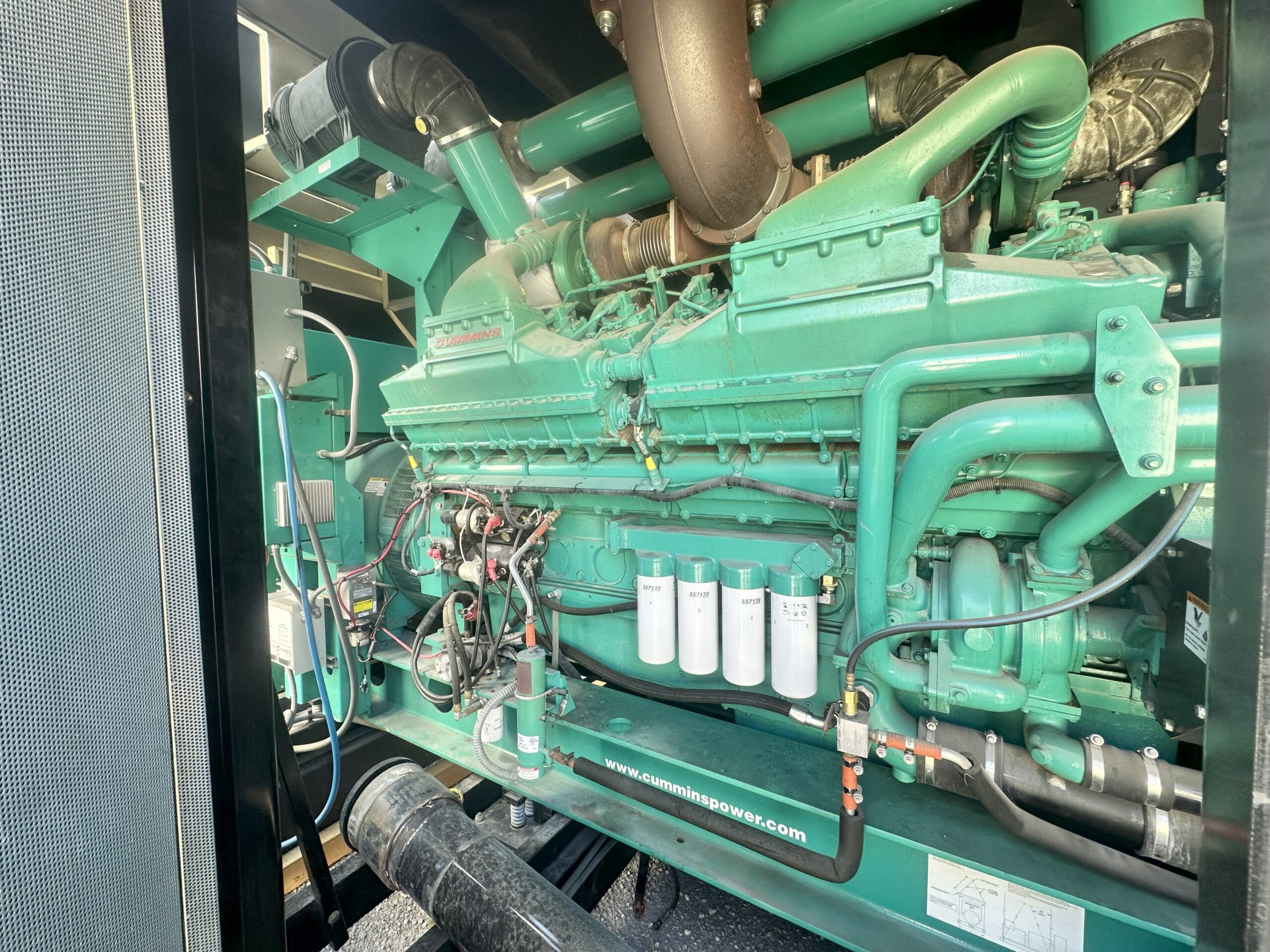
| Sales Channel | Time to Sale | Net Proceeds | Hassle Factor | Best For |
|---|---|---|---|---|
| Direct Dealer (PGE) | 1–2 weeks from first call | 85–95% of market value (no commissions) | Low — we handle freight, rigging, logistics | Units 250kW+ with documentation; facilities on a timeline |
| Online Auction (Iron Planet / Ritchie Bros.) | 6–10 weeks to auction date | 75–85% of hammer price after 7–9% seller commission | Medium — listing process, inspection, scheduling | Units with broad appeal; sellers with time and no minimum |
| Private Listing (Machinio / Equipment Trader) | 3–6 months typical | 90–100% of asking price if sold | High — inquiries, no-shows, brokers, negotiations | Sellers with time, unique/specialty equipment, patient pricing |
| Broker | 4–12 weeks | 70–85% of sale price after 10–20% broker margin | Low to medium — broker manages logistics | Sellers who don't want to deal with anything; accept lower net |
| Scrap / Metal Recycler | Days | 2–8% of market value (copper and steel weight only) | Very low | Last resort for non-running units with zero documentation |
We see the same patterns over and over. Some of these are mistakes of omission — things sellers didn’t do that would have helped. Some are active mistakes that hurt them. Here’s what to avoid.
Letting the unit sit with no exercise for 12+ months. A generator that hasn’t run in over a year raises immediate red flags. Diesel fuel degrades. Coolant stagnates. Seals and gaskets dry out. Battery systems fail. We’ve walked up to units that were described as “in good working condition” and found the starter motor corroded solid, the fuel injector tips varnished, and the radiator blocked with debris from a wasp nest. The unit wasn’t worthless, but our offer reflected the risk we were taking on. If your unit is sitting, run it monthly. Even 30 minutes under light load keeps it alive and keeps your value intact.
Trying to hide problems. We look at generators for a living. We have a 1MW load bank. We test. We know what burned injector exhaust smells like, we know what oil weeping from a head gasket looks like, and we know what a governor that’s hunting under load sounds like. Sellers who disclose known issues upfront are easier to deal with and sometimes get better offers because we can price the fix accurately. Sellers who try to conceal issues and get caught lose our trust entirely — and usually the deal.
Getting the unit “cleaned up” in ways that mask problems. This is the flip side. We’ve had units come to us freshly spray-painted, including the data plate. We’ve seen units with engine bays pressure-washed so aggressively that all the oil film was gone — which is actually a red flag, not a green one, because it makes it impossible to see what was leaking where. Don’t paint over the nameplate. Don’t clean an engine to the point where we can’t read its history.
Waiting too long. Asset value erodes. A CAT 3512 that sat unused for three years in a parking lot is worth less than the same unit that was turned over promptly when the facility decommissioned. Fuel has degraded. The weather seals on the enclosure have cracked. There may be animal nesting. Tires on a trailer-mounted unit have flat-spotted. Every month of unnecessary storage is money off the offer. If you know you’re done with a unit, call sooner rather than later.
Going to auction first, then us. Once a unit has been through an auction and didn’t meet reserve, or sold low, that sale price is in the market record. Iron Planet and Ritchie Bros. maintain public price history. We see those prices. A unit that went through auction six months ago for $28,000 is harder to price at $42,000 now, even if the market says it’s worth more, because there’s a public data point working against you. If you’re considering auction, call us first. If our offer isn’t better, you can still go that route.
Not knowing what you have. We get calls all the time that start with “I’ve got a big yellow generator, I think it’s a CAT.” That’s fine — we’ll figure it out. But sellers who have already identified the model number, the rated output, the approximate hours, and the general location get faster offers because we can do our market research before we call back. Five minutes looking at the nameplate is worth hours of back-and-forth.
Assuming Tier 4 is always more valuable. Tier 4 Final units do command a premium in some markets — data centers and municipalities have applications where the emissions compliance matters. But Tier 4 units also have selective catalytic reduction (SCR) systems, diesel particulate filters (DPF), and DEF systems that add maintenance complexity and cost. A Tier 4 unit with a failed DPF is not worth more than a well-maintained Tier 2 unit. The premium is real, but it’s conditional on the emissions systems being functional and documented.
Here’s exactly what happens when you contact us about selling a generator. No mystery, no wasted time.
Step 1: The first call. Call us at (818) 484-8550 or submit through our sell your equipment page. Tell us what you have: brand, model if you know it, approximate size, location, and hours if you know them. We’ll ask a few quick questions — has it run recently, do you have records, what’s the access situation, what’s your timeline. This call typically takes 10–15 minutes.
Step 2: Send photos, specs, and records. After the call, we’ll give you an email address or a direct upload link. We want: photos of the data nameplate (clear and close), photos of the full unit from four sides, photos of the control panel and ATS, and any documentation you can find — service records, load test reports, oil analysis. If the unit is running, a short video is worth a lot. Send us whatever you have; we’ll work with it.
Step 3: Written offer in 24–48 hours. Once we have the photos and information, we do our market research and internal review. We look at current inventory, recent comparable sales, freight and rigging estimates for your location, and any known issues you’ve disclosed. We come back to you with a written offer — a specific dollar amount, not a range. That offer is good for a defined period, usually 7–14 days depending on our inventory situation.
Step 4: Logistics planning and pickup scheduling. If you accept the offer, we move to scheduling. For units within driving range of Santa Clarita — roughly the Southwest and West Coast — we often send our own truck and crew. For units in the Midwest, Southeast, or Northeast, we coordinate licensed freight carriers who specialize in heavy equipment. Freight cost on a typical 500–1,000kW unit runs $3,500–$9,000 depending on distance and access. On very large units — CAT 3516-class, Cummins QSK60, MTU 16V4000 — freight and rigging can run $10,000–$15,000. That cost is ours, not yours. It’s already factored into our offer.
For units that require load testing before final acceptance — which we sometimes require on larger units with limited documentation — we bring our own 1MW load bank. We’ve run load tests in parking lots, on loading docks, and in fenced generator yards. It takes approximately 4–6 hours for a full step-load test on a 1,000kW unit. If the unit passes, we proceed. If it reveals a problem that wasn’t disclosed, we renegotiate or we walk.
Step 5: Wire transfer at pickup or net-on-delivery. For domestic transactions, we typically wire funds at pickup — meaning when our driver takes possession of the unit and it’s loaded for transport, you get paid. For units that require additional logistics confirmation (remote locations, international shipping, port coordination), we can structure net-on-delivery terms. Either way, you’re not waiting 30–60–90 days for an auction check to clear. Payment is fast and direct.
We operate nationwide. We’ve bought units in Alaska, Puerto Rico, and everywhere between. We’ve bought a Cummins QSK50 out of a data center in New Jersey that required a full building disassembly to get out — we handled the engineering, the rigging contractor, and the permitting. We’ve bought Doosan units off drilling platforms in North Dakota. Geography isn’t a dealbreaker. Access and economics might be, but geography isn’t.
If you’re managing a larger asset recovery situation — multiple units, a full facility decommission, or a package deal with transformers and switchgear — talk to us about that specifically. We handle those differently. The process is the same, but the offer structure and logistics planning are more detailed. Our industrial asset recovery page covers what those engagements look like.
If you’ve read this far, you have a unit to sell. Call us at (818) 484-8550 or go to our sell page and tell us what you’ve got. We respond fast, we make real offers, and we close. No auction commissions, no months of tire-kickers, no lowball broker who’s just trying to flip your unit on a margin. We’re the buyer. That’s it.
We wire funds at pickup for most domestic transactions. From first contact to wire transfer, the typical timeline is 1–2 weeks — a few days for us to review your information and make an offer, a few days for you to accept, and then we schedule logistics. On straightforward units with good documentation and accessible location, we’ve closed in under a week. We don’t write checks and we don’t do net-30 invoicing. Wire transfer, at pickup.
We buy generators from 50kW up to 3,000kW and above. The sweet spot of our market is 250kW–2,000kW standby and prime power units, but we’ve bought everything from a 60kW Kohler for a small facility to a 3,000kW CAT for a large data center project. If you have something outside that range — a very large utility-scale unit or a very small portable — call us anyway. We’ll tell you honestly whether we’re the right buyer.
Yes, and Tier 4 units can carry a meaningful premium — typically 10–20% over a comparable Tier 2 or Tier 3 unit — when the SCR, DPF, and DEF systems are functional and documented. The premium is conditional. A Tier 4 unit with a failed DPF or an SCR system that’s been bypassed is not worth a Tier 4 premium. If you have a Tier 4 unit, tell us whether the emissions systems are operational and whether you have the DEF system service records.
We still want to hear about it. A non-running unit isn’t automatically worthless — it depends on why it stopped running, what the condition is, and whether there’s documentation from when it was last operational. We’ll ask specific questions: Is it a fuel issue? A controls issue? A mechanical issue? Was it ever load-tested? We may offer to do our own inspection and load test before finalizing an offer, or we may make a conditional offer that adjusts based on what we find. The conversation costs nothing.
Yes. We coordinate everything. For units we’re buying, freight and rigging are our cost, already factored into the offer. We work with licensed, insured heavy-equipment freight carriers and rigging contractors nationwide. For a standard outdoor unit on a concrete pad with forklift access, it’s straightforward. For units inside buildings, in basements, on rooftops, or in other constrained locations, we plan the rigging path before we finalize logistics. Freight cost on most units runs $3,500–$15,000 depending on size, distance, and access complexity — that’s our number, not yours.
The minimum is: clear photos of the data nameplate, photos of the full unit from all four sides, and the approximate hour meter reading. That gets us to a preliminary offer range. To get to a final written offer, it helps to have: any service records you can find, the most recent load test report if one exists, oil analysis reports, and confirmation of whether the controller is accessible and password-known. Send whatever you have. We work with what’s available and we’ll tell you if we need more.
Send us photos of the nameplate and unit, tell us your hours and location, and we’ll come back with a written offer — not a range, a number — within 24–48 hours. No auction commissions, no listing fees, no months of fielding calls from brokers. We’re the buyer. Wire transfer at pickup. Call (818) 484-8550 or start online.