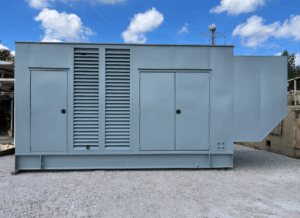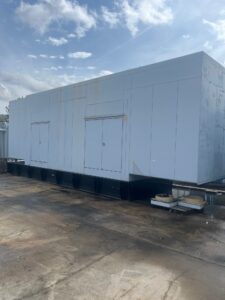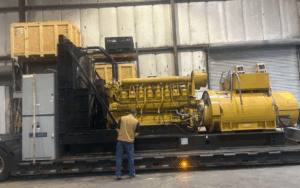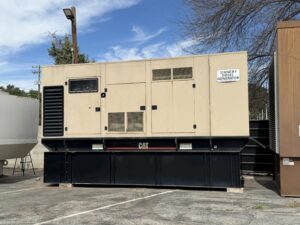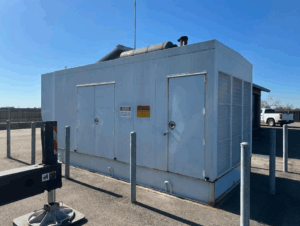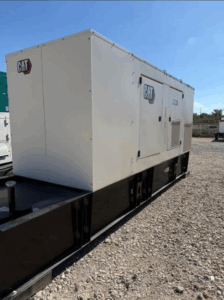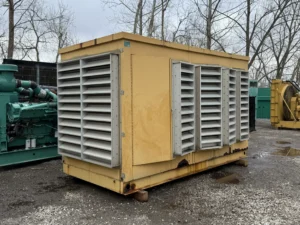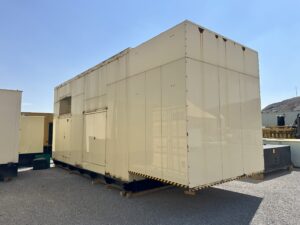
Hospital generator replacement involves navigating NFPA 110 compliance, Joint Commission documentation requirements, and CMS Conditions of Participation while maintaining uninterrupted emergency power coverage for critical care areas. Power Generation Enterprises works both sides of the hospital generator lifecycle: we sell replacement units from 500kW to 2,000kW and buy surplus hospital generators that still hold significant market value. Call (818) 484-8550 to discuss your replacement timeline or get a quote on your existing unit.
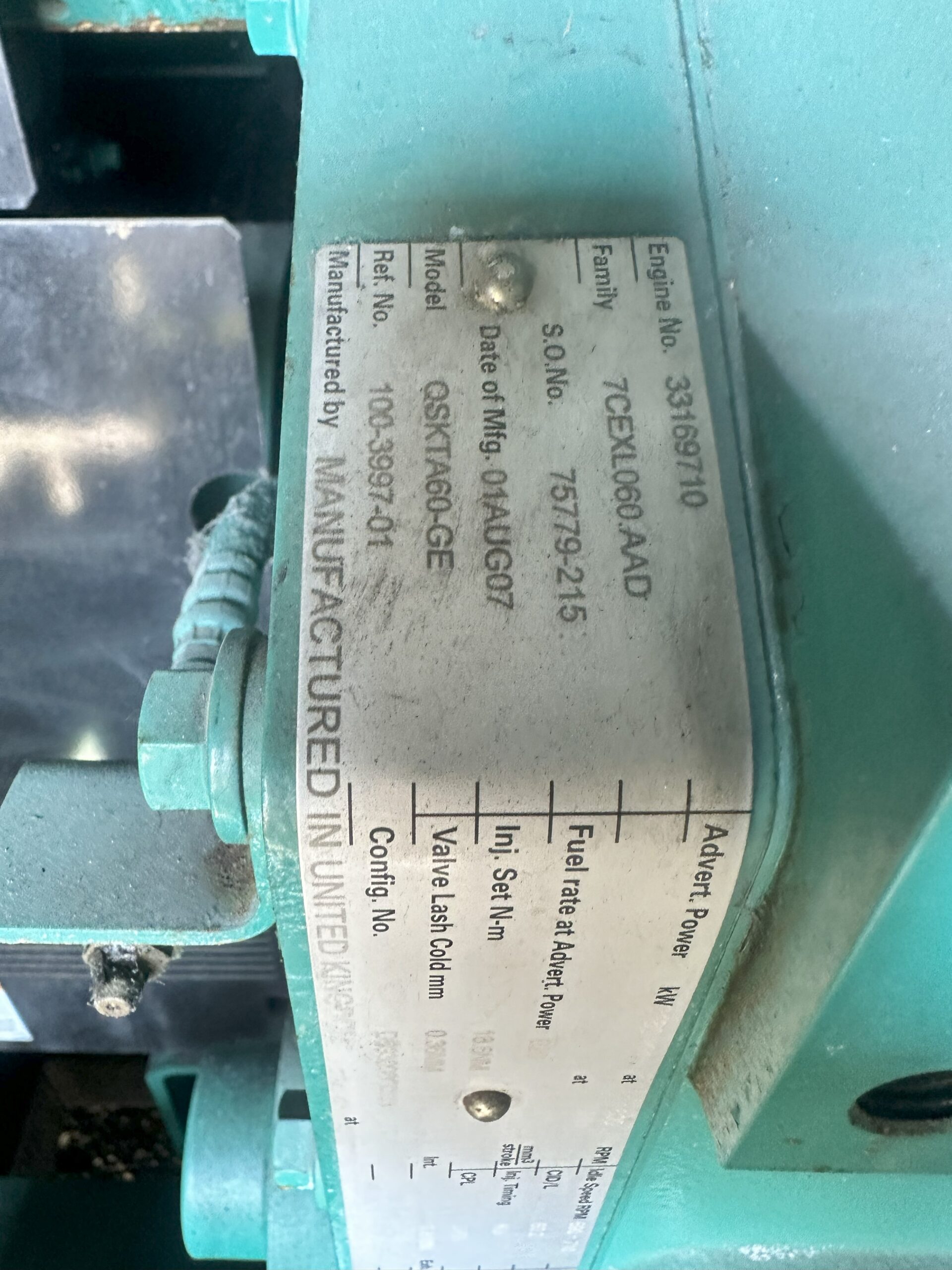
We get a call like this about once a month. A facilities director at a 300-bed community hospital just ran the annual load bank test on a 25-year-old Caterpillar 3512 and the unit failed to hold load above 80%. The Joint Commission survey is six months out. The AQMD has been sending letters about the engine’s Tier 0 emissions status. And the hospital CFO wants a capital expenditure justification by Friday.
This is the point where most hospital facilities teams realize they should have started the replacement planning process two years ago. But they are not alone. We have worked with hospitals across the western United States on exactly this situation, and the path forward is more manageable than it looks when you are staring at a failed load bank report.
Hospital emergency power systems exist inside a regulatory framework that does not leave much room for improvisation. NFPA 110, the Standard for Emergency and Standby Power Systems, classifies hospital generators as Type 10 systems that must restore power to the essential electrical system within 10 seconds of a utility outage. The Joint Commission’s Environment of Care standards require hospitals to document weekly generator testing, monthly operational inspections, and annual load bank testing at minimum 30% of nameplate capacity. CMS Conditions of Participation mandate that hospitals maintain emergency power for all critical care areas, operating suites, and life safety systems.
None of this is news to any hospital facilities engineer who has been through a Joint Commission survey. What catches people off guard is how these requirements interact during a replacement project. You cannot simply shut down your emergency power system while the old generator is removed and the new one is installed. NFPA 110 Section 8.3.4 requires that the facility maintain emergency power capability throughout the replacement process. For most hospitals, this means the replacement project must include temporary emergency power, which adds cost and complexity but is non-negotiable.
The practical trigger for most hospital generator replacements falls into one of four categories. The first and most urgent is a failed load bank test, where the unit cannot sustain rated output. The second is emissions compliance: hospitals in California AQMD jurisdictions are facing increasing pressure to retire Tier 0, Tier 1, and even Tier 2 diesel engines. The third is parts obsolescence. When Caterpillar or Cummins discontinues parts support for an engine family, lead times for critical components stretch from weeks to months, and the risk of an extended outage during a parts hunt becomes unacceptable for a healthcare facility. The fourth trigger is building expansion: a new patient tower or surgical wing that pushes the electrical load beyond the existing generator’s capacity.
The biggest mistake we see hospitals make is treating the generator replacement as a facilities project instead of a compliance project. The generator is just hardware. The compliance documentation, the temporary power plan, the commissioning protocol, and the transition testing schedule are what determine whether the project goes smoothly or becomes a crisis.
Start with an updated load study. Hospital electrical loads change over time as departments add imaging equipment, data systems, and patient monitoring networks. The generator that was correctly sized in 2002 may be undersized for the facility’s current essential electrical system load. A licensed electrical engineer should perform a load study that accounts for the current connected load on the essential electrical system, motor starting inrush currents for large HVAC equipment and elevator systems, planned expansions within the next 10 years, and any load growth from converting gas-fired equipment to electric as hospitals pursue emissions reduction goals.
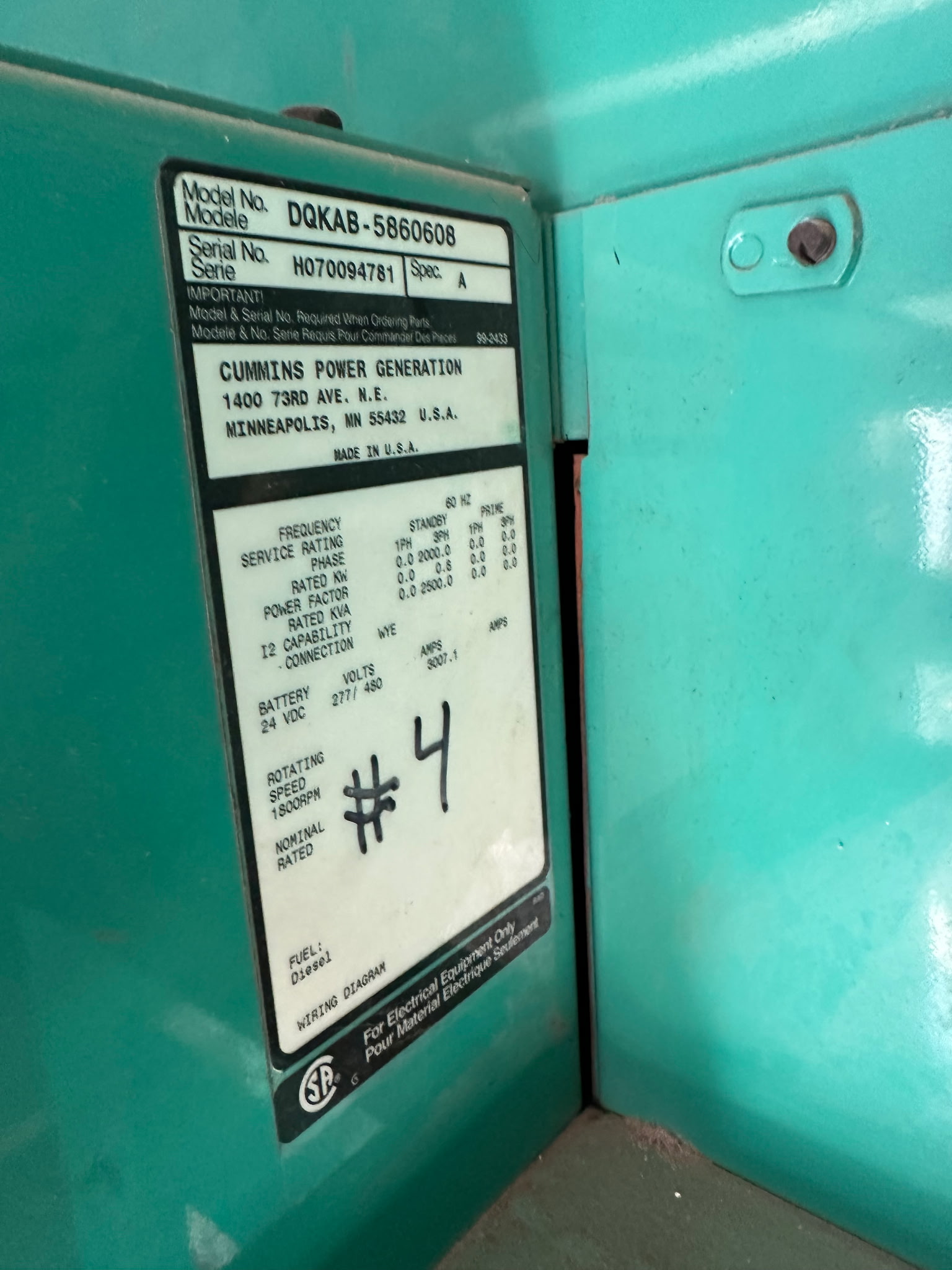
Once you have a load study, the specification process is straightforward. Hospital generators in the 500kW to 2,000kW range are overwhelmingly diesel-powered. The major platforms are Caterpillar 3512B and 3516B (1,000kW to 2,000kW), Cummins QSK60 and QSK50 (1,250kW to 2,000kW), Kohler KD Series (800kW to 2,500kW), and MTU 12V/16V4000 (1,000kW to 2,000kW). All of these platforms meet current EPA Tier 4 Final emissions standards, carry NFPA 110 Level 1 certification, and have parts networks capable of supporting 30-year service lives.
Lead times matter. New hospital-spec generators from Caterpillar or Cummins currently run 16 to 24 weeks from order to delivery, depending on configuration. Switchgear and automatic transfer switches add another 12 to 20 weeks. Hospitals that start the specification process 18 months before a Joint Commission survey have time to do this properly. Hospitals that start 6 months out are making compromises.
That is where used and surplus generators become relevant. Power Generation Enterprises maintains inventory in the 500kW to 2,000kW range that can ship within 2 to 4 weeks. A low-hour used Caterpillar 3516B or Cummins QSK60 with documented maintenance history delivers the same operational reliability as new equipment at 40 to 60% of the cost, with a fraction of the lead time. For hospitals under time pressure, this is frequently the difference between making the survey window and not.
| Current Hospital Generator | Typical Age at Replacement | Recommended Replacement | kW Range | Estimated Residual Value |
|---|---|---|---|---|
| CAT 3512 / 3512B | 20-30 years | CAT 3512E or Cummins QSK50 | 800-1,250kW | $35,000-$65,000 |
| CAT 3516 / 3516B | 20-28 years | CAT 3516E or Cummins QSK60 | 1,400-2,000kW | $55,000-$95,000 |
| CAT 3508 / 3412 | 22-30 years | CAT C32 or Kohler KD800 | 500-800kW | $20,000-$45,000 |
| Cummins QSK60 / KTA50 | 18-25 years | Cummins QSK60 G23 or CAT 3516E | 1,250-2,000kW | $50,000-$85,000 |
| MTU 12V/16V4000 | 18-25 years | MTU Series 4000 L64 or CAT 3516E | 1,000-2,000kW | $45,000-$75,000 |
| Kohler older series | 20-28 years | Kohler KD Series or Cummins QSK50 | 600-1,500kW | $25,000-$55,000 |
Here is the part of the conversation that hospital facilities directors do not expect. That 25-year-old Caterpillar 3512 that just failed your load bank test still has real market value. Not scrap value. Market value.
Hospital generators are among the most desirable units on the used generator market for a specific reason: maintenance documentation. A hospital generator that has been maintained under a Joint Commission-compliant preventive maintenance program has oil analysis records, coolant analysis records, load bank test results, fuel system inspection logs, and transfer switch test documentation going back to installation. No other application produces that kind of maintenance paper trail. Power Generation Enterprises buys generators from hospitals, data centers, and industrial facilities, and we can say without qualification that hospital units with complete maintenance records command the highest prices in the used market.
A 25-year-old Caterpillar 3512 rated at 1,000kW in running condition with documented maintenance history is worth $35,000 to $65,000 to a dealer like us, depending on hours, enclosure condition, and configuration. That is not hypothetical. We buy units like this regularly. A comparable unit without maintenance records is worth $15,000 to $25,000. The records alone account for $20,000 to $40,000 in value because they allow us to represent the unit’s condition to the next buyer with confidence.
Larger units hold proportionally more value. A Caterpillar 3516B at 1,825kW with good records is worth $55,000 to $95,000. A Cummins QSK60 at 2,000kW in similar condition runs $50,000 to $85,000. MTU 16V4000 units at 2,000kW bring $45,000 to $75,000. These are real transaction prices, not estimates. The exact figure depends on hours, engine condition, whether the unit has a sound-attenuated enclosure, and whether the automatic transfer switch is included in the sale.
Compare that to scrap value. A 1,000kW generator set weighs approximately 15,000 to 20,000 pounds. At current scrap steel and copper pricing, the melt value is $3,000 to $5,000. Hospitals that do not engage a generator buyer before starting the replacement project often discover too late that their demolition contractor has quoted the old unit at scrap value, not market value. We have purchased generators from hospitals where the facilities team called us after learning their contractor planned to scrap a unit worth $60,000 for $4,000 in metal value.
Generator removal from a hospital campus is not the same as removing a generator from a warehouse or a construction site. Hospitals have constraints that most rigging contractors encounter only occasionally, but that we deal with routinely.
Noise is the first issue. Hospital campuses have patient care areas, and generator removal involves cranes, heavy trucks, and diesel equipment. Most hospitals restrict heavy equipment operations to specific hours, typically 7 AM to 5 PM on weekdays, with no work during certain procedures or in proximity to certain buildings. We coordinate removal schedules with the hospital’s facilities team and nursing administration to avoid conflicts with patient care operations.
Access is the second issue. Hospital generators are frequently located in mechanical yards, on rooftops, or in basement-level mechanical rooms. Rooftop units require crane access and may need partial disassembly before lifting. Basement units may require disassembly and removal through freight elevators or mechanical corridors. We have removed generators from hospital basements that required cutting the unit into sections to fit through existing doorways. The logistics add cost, but the unit still holds enough value to justify the effort.
The third constraint is timing. The old generator cannot be removed until the new generator is commissioned, tested, and accepted by the authority having jurisdiction. In practice, this means the old generator sits in place for 30 to 90 days after the new unit is operational while the hospital completes the transition documentation and confirms that the new system passes all required acceptance tests. Hospitals should plan for this overlap period in their project timeline and communicate the removal timeline to Power Generation Enterprises early so we can schedule rigging and transport accordingly.
Our process for buying hospital generators starts with a phone call. We need the make, model, kW rating, approximate hours, fuel type, and whether the unit has an enclosure. If the unit has maintenance records, even partial ones, tell us. We will provide a preliminary quote within 24 hours. If the numbers work, we send a technician to inspect the unit on-site before finalizing the purchase price. We handle all rigging, transport, and logistics. The hospital receives payment upon removal. Call (818) 484-8550 or submit details through our equipment sale form.
NFPA 110 Section 8.3.4 requires continuous emergency power capability throughout the replacement process. In practice, this means installing and commissioning the new generator before decommissioning the old one, or providing temporary emergency power during the transition. Most hospitals use a rental generator rated to match the essential electrical system load during the period between old unit shutdown and new unit commissioning. The temporary generator must be connected through the existing or temporary automatic transfer switch and tested before the permanent unit is disconnected. Document everything: the Joint Commission will review the transition plan and testing records at your next survey.
New hospital-specification generators from Caterpillar and Cummins currently run 16 to 24 weeks from order to delivery, depending on engine model and enclosure configuration. Paralleling switchgear adds 12 to 20 weeks. Automatic transfer switches run 8 to 16 weeks. The total project timeline from purchase order to commissioned and accepted generator is typically 9 to 14 months. Used generators from Power Generation Enterprises inventory can ship in 2 to 4 weeks and cut the total project timeline significantly.
Sub-base fuel tanks (integrated into the generator frame) are included in the sale and are removed with the generator. External above-ground fuel tanks are typically quoted separately. Underground storage tanks (USTs) require environmental assessment and decommissioning by a licensed environmental contractor regardless of the generator sale. UST decommissioning is the hospital’s responsibility and should be budgeted separately from the generator replacement project. If your old generator sits on a sub-base tank, the tank condition affects the unit’s resale value. Tanks with documented annual inspections and no leak history add value; tanks with corrosion or failed integrity tests reduce the purchase price.
Yes. A generator that fails a load bank test at full rated capacity may still hold significant market value. The failure mode matters. A unit that holds 80% load but not 100% likely has injector or turbocharger issues that are repairable. A unit with catastrophic engine failure is worth substantially less but still more than scrap. Power Generation Enterprises buys generators in all conditions. We will evaluate the unit based on the failure mode, engine model, hours, and remaining component life. Call (818) 484-8550 with the specifics and we will give you an honest assessment.
Yes. Power Generation Enterprises coordinates all rigging, crane service, and transport logistics for hospital generator purchases. We work with rigging contractors experienced in hospital campus operations, including noise-restricted scheduling, limited-access mechanical yards, rooftop crane lifts, and basement unit disassembly. The purchase price we quote is net to the hospital after all removal costs. You do not pay separately for rigging or transport. We schedule removal around your facility’s operational requirements and complete most hospital removals in a single day.
A used generator with documented maintenance history, low standby hours, and current emissions compliance can be an excellent choice for hospital applications. The key requirements are NFPA 110 Level 1 compliance capability, sufficient capacity for the essential electrical system load, and availability of parts and dealer service support. A 5-year-old Caterpillar 3516B with 500 hours of standby service is functionally identical to a new unit for hospital emergency power purposes. Power Generation Enterprises provides written inspection reports, load bank test results, and operational guarantees on all inventory sold for healthcare applications. The cost savings of 40 to 60% compared to new equipment frees capital for other facility priorities.
Power Generation Enterprises works both sides of the hospital generator lifecycle. We sell replacement generators from 500kW to 2,000kW that meet NFPA 110 Level 1 requirements and can ship weeks instead of months. And we buy surplus hospital generators at market value, not scrap value, with full rigging and transport handled by our team. One call covers both sides of the project.